What does cornea mean?
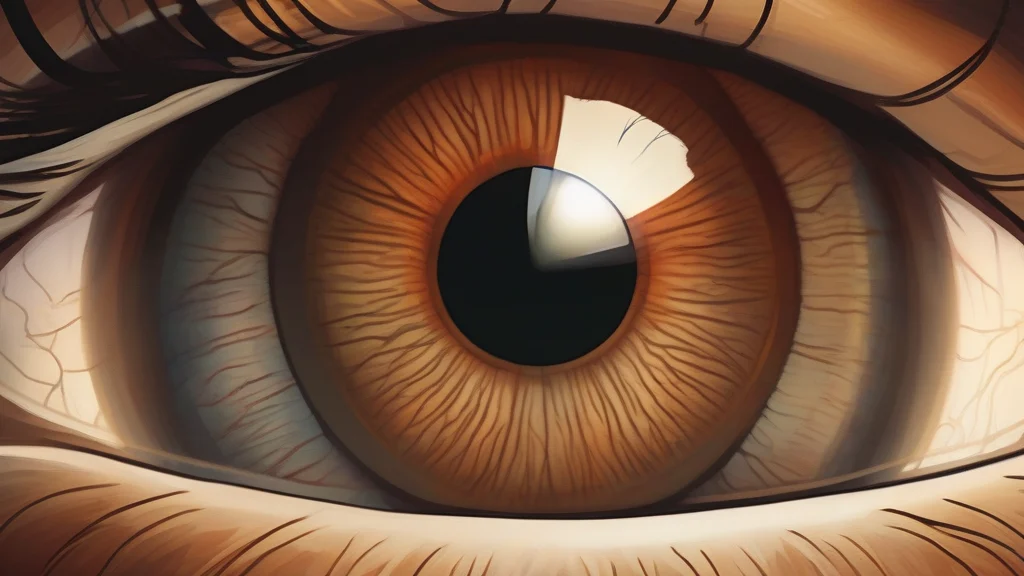
The cornea is the transparent, curved layer of tissue at the very front of the eye, sitting over the coloured iris and the dark pupil. Though only about half a millimetre thick at its centre, it performs a vital optical job: together with the lens, it bends incoming light so that images focus sharply on the retina. The cornea contains no blood vessels, drawing nourishment instead from tears and the aqueous humour behind it — a design that keeps it perfectly clear. Because it is exposed to the outside world, it is vulnerable to scratches, infections, and ulcers, making phrases like 'corneal abrasion' common in medical settings. Remarkably, since the cornea lacks blood vessels, it is one of the few tissues that can be transplanted between people without extensive matching, and corneal donation routinely restores sight. The word derives from Latin 'cornu', meaning horn, reflecting its tough, horn-like texture.
nounThe transparent, dome-shaped layer of tissue forming the front surface of the eye, covering the iris and pupil, which refracts incoming light onto the lens.
- The transparent dome-shaped front portion of the eyeball that covers the iris and pupil and helps focus light.
"A scratch on her cornea made even blinking painful for days."
"The laser reshapes the cornea so that light focuses correctly on the retina."
"He wore an eye patch for a week while his scratched cornea healed."
The standard plural is 'corneas'; the Latin-style plural 'corneae' occasionally appears in older medical texts.
"Both corneas were clouded by scarring after the accident."
Your cornea has no blood supply — it feeds itself entirely on tears and the fluid inside your eye.
Reviewed by Deb Chak, Editor. AI-assisted content curated by RJS Tech Solutions LLP.
Etymology of cornea
'Cornea' entered English in the late 16th or early 17th century, adapted from the Latin phrase tunica cornea ('horny layer'), coined by early anatomists because the tissue's firm texture resembled thin horn. The underlying root is Latin 'cornu', meaning horn, which also gives English 'horn' itself, 'unicorn', and the adjective 'corneous'. Its natural derivative is the modern adjective 'corneal'.
Related word forms
How cornea is actually used
A technical anatomical term used in medicine, optometry, and general health writing; it carries no figurative or informal usage. In clinical contexts it almost always appears in its adjective form 'corneal' (e.g., corneal abrasion, corneal graft), while 'cornea' as a noun appears most often when discussing injury, donation, or anatomy.
Easily confused with cornea
The cornea is the clear front window of the eye, while a corona is a crown-like ring, such as the glowing halo around the sun or the outermost layer of a virus.