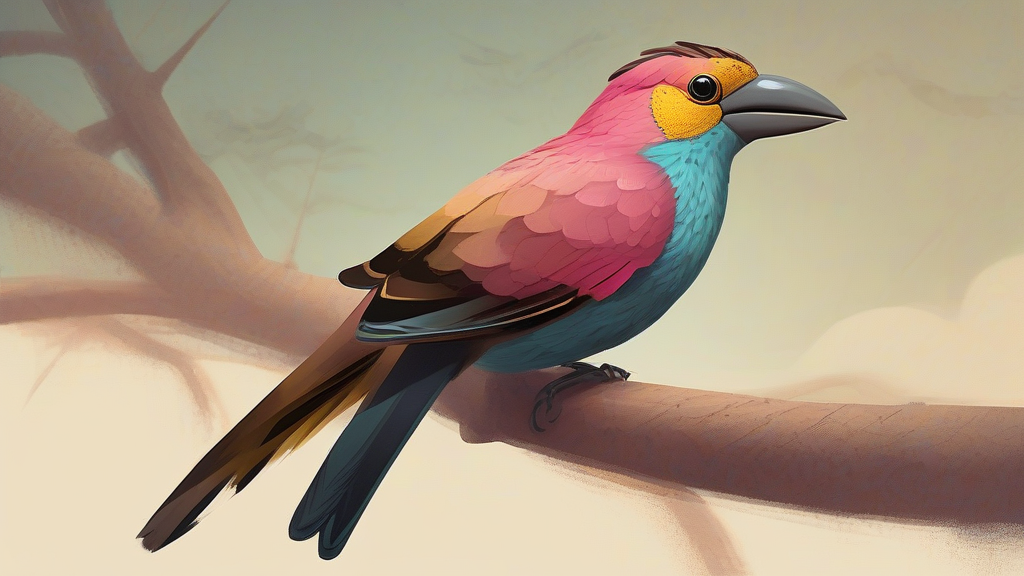
What does cotinga mean?
A cotinga is any member of Cotingidae, a family of songbirds found exclusively in the tropical forests of Central and South America. Cotingas are celebrated for their extraordinary appearance: many males wear plumage of saturated turquoise, purple, crimson, or white, often with elaborate crests or throat ornaments, while females tend to be drabber olive-brown. They are primarily fruit-eaters, making them important dispersers of seeds through the rainforest canopy, though some species also take insects. The family includes famous showpieces such as the spangled cotinga, the purple-throated fruitcrow, and the deafeningly loud screaming piha, whose calls dominate the soundscape of the Amazon. Because they live high in the canopy of remote forests, cotingas are prized sightings for birdwatchers and ecotourists. In usage, the word belongs mostly to ornithology and natural-history writing rather than everyday conversation, but it carries strong connotations of tropical brilliance and biodiversity.
nounA cotinga is any of various brightly coloured, fruit-eating perching birds constituting the family Cotingidae, native to tropical forests of Central and South America.
- Any of a family (Cotingidae) of tropical American passerine birds noted for their vivid plumage and fruit-based diet.
"The male spangled cotinga flashed its brilliant turquoise plumage through the canopy of the Amazonian forest."
"Birdwatchers on the Ecuador tour hoped to glimpse an Andean cock-of-the-rock, one of the most flamboyant members of the cotinga family."
"Because cotingas feed almost entirely on fruit, they play an important role in seed dispersal throughout Neotropical forests."
The regular English plural "cotingas" is standard in modern ornithology; the Latinate "cotingae" is rare and largely confined to older scientific literature.
"Several cotingas were spotted feeding in a fig tree along the river."
The cotinga's screaming-piha cousin is the loudest bird in the Amazon — its call can be heard nearly half a mile away.
Reviewed by Deb Chak, Editor. AI-assisted content curated by RJS Tech Solutions LLP.
Etymology of cotinga
The word "cotinga" entered European languages in the early modern period from Tupi, an indigenous language of Brazil, where it named these brilliantly coloured birds. It passed into French and other European languages before being adopted into English, appearing in natural-history writings by the 17th century. Because it derives from Tupi rather than Latin or Greek, it has no classical cognates in English, standing instead among loanwords that reflect early European contact with South America.
Related word forms
How cotinga is actually used
The word is used mainly in ornithological contexts and by serious birdwatchers; in general writing it appears chiefly in discussions of tropical birds. The plural "cotingas" is standard, though the Latinized plural "cotingae" is occasionally used in older ornithological texts.