What does cotter mean?
A cotter is a simple but essential mechanical fastening: a metal pin or wedge driven through a hole or slot to prevent parts of a machine from separating or rotating loose. In its most familiar form, the cotter pin — a split piece of springy wire bent back after insertion — secures nuts on bolts, keeps wheels on axles, and holds crank arms in place, making it ubiquitous in bicycles, automobiles, and farm machinery. The word also carries an older, human meaning: in Scotland and Ireland, a cottar was a poor laborer who occupied a cottage on an estate in return for work, a figure central to rural history there. Both senses trace back to the humble 'cot' or cottage, linking the small pin and the small dwelling in one etymological thread. Today the word appears chiefly in technical manuals and hardware catalogs, valued for naming precisely what no other single word does.
A metal pin or wedge passed through a slot or hole to hold machine parts together; especially a split pin (a cotter pin) used to secure a nut, bolt, or shaft.
"Make sure the cotter is fully seated before you tighten the castle nut."
Standard in engineering and mechanical contexts; the compound 'cotter pin' is the most frequent form in American English.
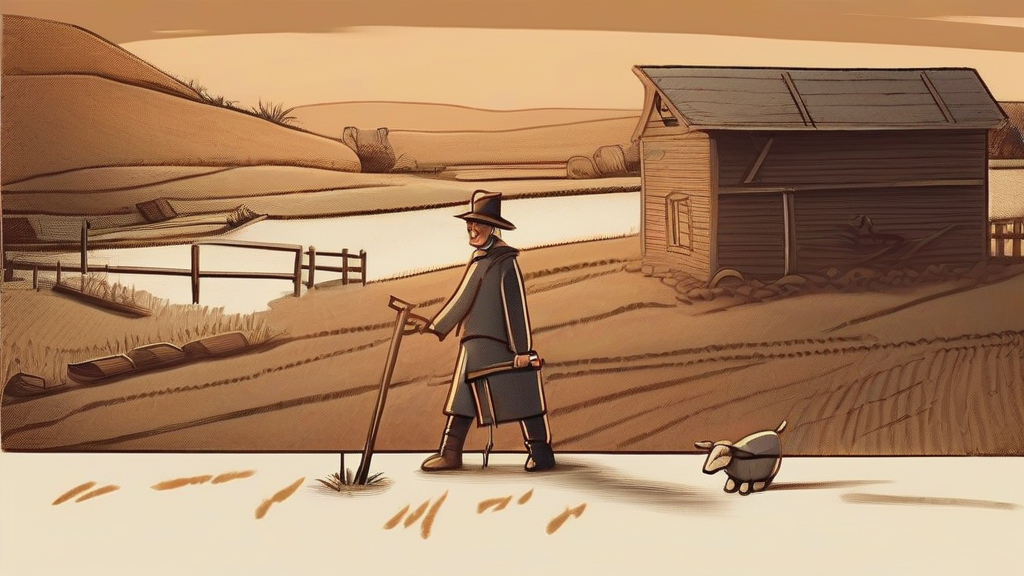
(Chiefly Scottish and Irish, historical) A person occupying a cottage in return for labor on an estate; a rural laborer of low social rank.
"The census recorded him as a cottar, working the laird's fields in exchange for his one-room home."
Often spelled 'cottar' when referring specifically to the historical Scottish tenant class; largely confined to historical or regional writing today.
Regular plural; used when referring to multiple pins or fasteners, or historically to multiple tenant laborers.
"Keep a supply of spare cotters in the toolbox for emergency repairs."
That tiny split piece of metal holding your bike pedal on has been doing its humble job since the age of steam engines — and it still goes by its centuries-old name: the cotter.
Reviewed by Deb Chak, Editor. AI-assisted content curated by RJS Tech Solutions LLP.
Etymology of cotter
The word derives from Middle English, ultimately from Old French 'cote' or 'cot', meaning a cottage or hut, itself of Germanic origin — the same root that gives us 'cot' and 'cottage'. The mechanical sense arose by analogy: just as a cotter-pin wedges and holds, so the term came to name the pin itself, attested from at least the seventeenth century. The sense referring to a cottage-dwelling laborer developed directly from the dwelling meaning and remains current mainly in Scottish and Irish usage, often spelled 'cottar'. Cognates include 'cot' and 'cottage', all pointing back to that same Germanic root for a small shelter.
How cotter is actually used
The mechanical sense is standard technical vocabulary in both British and American English, common in engineering, cycling, and farming contexts. The historical 'peasant' sense survives mainly in Scottish and Irish contexts and in historical writing, where the spelling 'cottar' is often preferred.
Easily confused with cotter
A cotter is a metal fastening pin, whereas cotton is the soft fibrous material used for textiles.
The mechanical sense is spelled 'cotter', while the historical term for a cottage-dwelling farm laborer is more often 'cottar' in Scotland and Ireland.