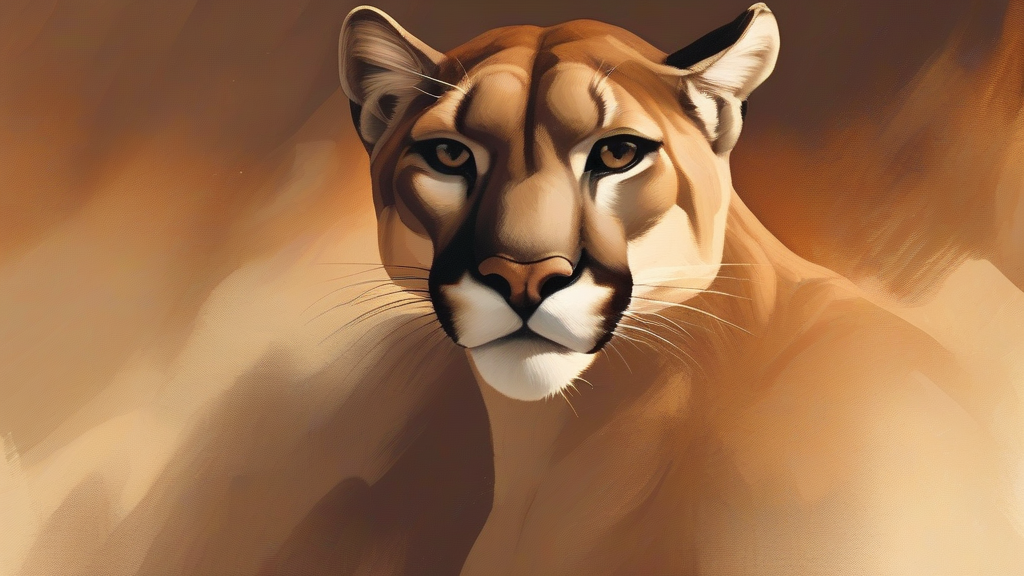
What does cougar mean?
A cougar is a large, powerful wildcat native to the Americas, known scientifically as Puma concolor. It has a slender, muscular build, tawny-brown coat, and a long tail, and it holds the distinction of being the wild cat with the greatest range in the Western Hemisphere, stretching from Canada to the southern Andes. Because the same animal was encountered across this vast territory by speakers of different languages, it accumulated numerous alternative names — including puma, mountain lion, panther, and catamount — all referring to one species rather than distinct animals. Cougars are solitary and stealthy hunters, typically preying on deer. Separately, in informal North American English, 'cougar' is used figuratively to describe an older woman romantically involved with a much younger man; this slang sense, popularized from the late twentieth century onward, is widely recognized but often considered derogatory toward women, so it warrants caution in polite or formal contexts.
A large, solitary wildcat (Puma concolor) of the Americas, having tawny fur and a long tail; also known regionally as the mountain lion, puma, panther, or catamount.
"Cougars roam vast territories across the Rocky Mountains, hunting mostly at dawn and dusk."
In some regions, especially Florida, local populations are referred to as 'panther'; these are the same species.
(Informal, chiefly North American slang) A middle-aged or older woman who seeks romantic or sexual relationships with considerably younger men.
"The sitcom played the cougar stereotype for laughs, casting a glamorous forty-something pursuing college-age men."
This sense is colloquial and often carries sexist or mocking connotations; avoid in formal contexts.
The plural follows the regular English pattern of adding -s.
"Wildlife biologists tracked three cougars using camera traps along the ridge."
The word 'cougar' comes from the Tupi language of Brazil, borrowed into English via Portuguese — one of the many names for the same big cat that also answers to puma, panther, mountain lion, and catamount.
Reviewed by Deb Chak, Editor. AI-assisted content curated by RJS Tech Solutions LLP.
Etymology of cougar
The word 'cougar' entered English in the late eighteenth century, borrowed from French 'couguar', which itself derived from Portuguese 'çucana' (or a related form) originating in Tupi, an indigenous language of Brazil where the animal was called something like 'suasuárana'. It is thus ultimately of South American indigenous origin, unrelated to European roots. The name spread alongside European accounts of the animal's enormous range, joining the cluster of names — puma (from Quechua), jaguar (from another Tupi word), and others — that reflect the Americas' linguistic heritage.
How cougar is actually used
The animal sense is standard and neutral. The slang sense, which emerged in North America around the late 20th century, is informal and often carries sexist overtones; it should be used with care in formal writing. The animal is known by many regional names — mountain lion, puma, panther, catamount — all referring to the same species.
Easily confused with cougar
Puma refers to the same animal and is simply a synonym, not a different species.