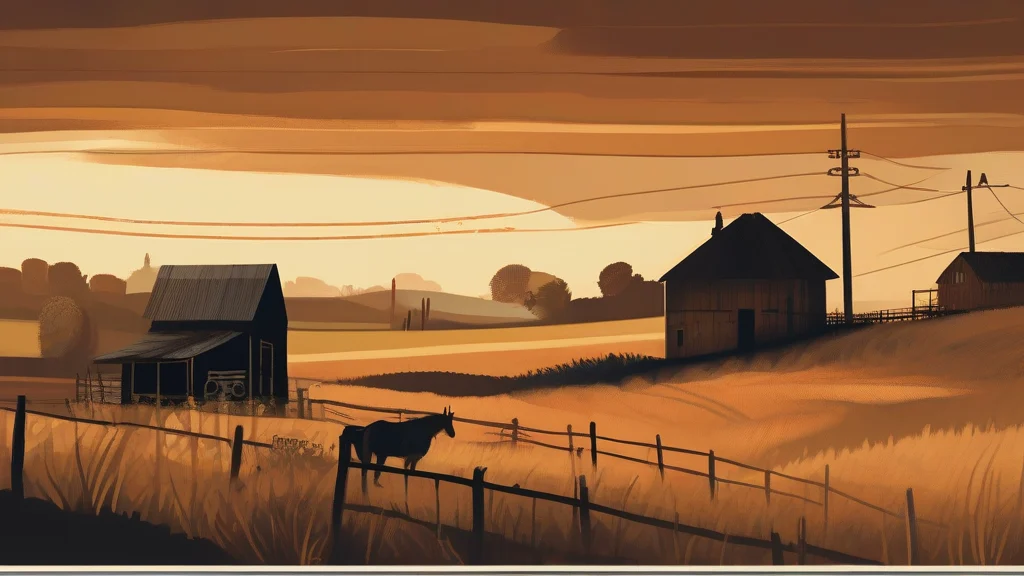
What does countrified mean?
"Countrified" is an adjective describing people, places, or things that display the qualities traditionally associated with the countryside: simplicity, rusticity, and a certain old-fashioned charm. A countrified cottage might feature rough-hewn beams and a flagstone floor; a countrified manner might suggest someone more at home in a village than a metropolis. The word sits on an interesting tonal fault line. Applied deliberately to interiors, music, or fashion, it connotes warmth, authenticity, and escape from urban polish. Applied to individuals, however, it has often carried a faint whiff of condescension, implying provincialism or unsophistication — a usage rooted in centuries of city-versus-country snobbery. Writers therefore choose it carefully: it can flatter a design aesthetic or subtly diminish a person's polish. Derived from "country," which ultimately traces back through Old French "contree" to Latin "contra," the word belongs to a family of terms about land and place, and it remains a useful shorthand wherever rural texture meets urban expectation.
Characteristic of the countryside; rustic, simple, or unsophisticated in the manner of rural life.
"The band swapped their electric sound for a countrified acoustic set."
Often affectionate when describing style or décor; potentially condescending when describing people.
To make something rural or rustic in character (used chiefly as "countrify").
"They decided to countrify the downtown bar with barn wood and hanging lanterns."
The verb form "countrify" is less common than the adjective.
"Countrified" once carried a sting — Victorian city-dwellers used it to sneer at anything smelling of the farmyard, though today it usually signals cozy, homespun charm.
Reviewed by Deb Chak, Editor. AI-assisted content curated by RJS Tech Solutions LLP.
Etymology of countrified
"Countrified" derives from "country," formed by adding the suffix "-fy" (meaning "to make") to indicate something made country-like. "Country" itself came into English from Old French "contree" (modern French "contrée"), meaning a tract of land, which descends from Latin "contra," originally meaning "lying opposite." The adjective emerged in English around the early 18th century, with the variant spelling "countryfied" appearing alongside it before "countrified" became standard. It shares this root with words such as "county" and "contrary," all tracing back to the same Latin source.
Related word forms
How countrified is actually used
The word can be neutral or affectionate when describing rustic style, but it has historically carried a mildly pejorative edge when applied to people, implying lack of sophistication. Tone depends heavily on context: praise for a countrified kitchen, mild condescension for a countrified manner.
Easily confused with countrified
"Countryfied" is an older spelling variant of the same word; "countrified" is the standard modern form.
"Counterfeit" means made in imitation of something with intent to deceive, whereas "countrified" simply describes something as having rustic, rural character.