
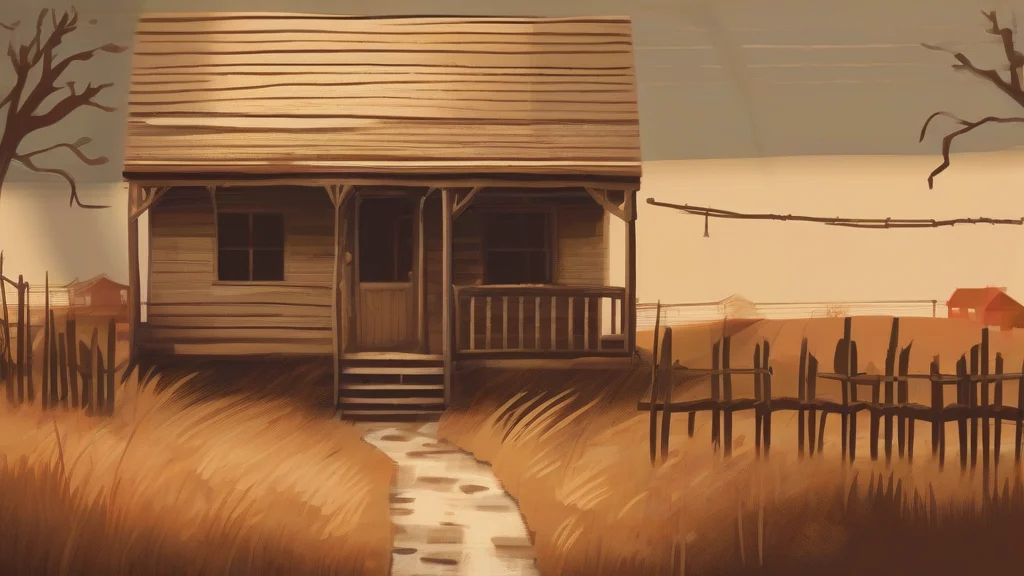
What does homespun mean?
Homespun describes something plain, uncomplicated, and free from fashionable display or pretension. Its warmth often comes from an association with traditional, rural, or working life, as in “homespun virtues” such as honesty, thrift, and self-reliance. The expression can also sound faintly nostalgic, presenting simplicity as a virtue in contrast to artificial sophistication. Historically, homespun was a noun for yarn or cloth spun at home, often by hand, and later became an adjective for that material. The word's historical sense eventually gave rise to figurative uses describing plain speech, stories, philosophy, and people. Today, it is most often encountered in literary criticism, informal commentary, and phrases that praise unpretentious authenticity. Although usually complimentary, it may become mildly dismissive when applied to a person, especially in the older sense of someone regarded as unsophisticated.
Plain, simple, and unpretentious, especially in a way associated with traditional or practical values.
"The minister spoke with a homespun directness that put the audience at ease."
Often approving or nostalgic in literary and informal usage.
Fabric made from yarn spun at home, especially by hand.
"The dress was made from a coarse homespun woven in the village."
This is a literary or historical sense and is now relatively uncommon.
The plural is rare; the word is more often used for fabric in the uncountable sense.
"The collection included several homespuns woven by rural artisans."
Before factory-made cloth became commonplace, a homespun was fabric spun from yarn at home—a word that now survives as a praise for honest simplicity.
Reviewed by Deb Chak, Editor. AI-assisted content curated by RJS Tech Solutions LLP.
Where does homespun come from?
Homespun is a compound of home and spun and dates from the early modern period. It originally referred to yarn or cloth spun at home rather than in a commercial workshop. The figurative sense developed from this domestic or traditional association, applying the idea of plainness to language, customs, values, and character.
How homespun is actually used
The adjective is common in literary and informal critical contexts and often carries a mildly approving tone. The noun senses referring to fabric or to an unsophisticated person are now dated, with the latter sometimes carrying a condescending implication.
Easily confused with homespun
Homespun emphasizes simplicity, plainness, and traditional values, whereas homegrown chiefly means produced domestically or originating within a particular community or country.