What does courante mean?
The courante is a dance of French origin that flourished in the sixteenth and seventeenth centuries, taking its name from the French word for 'running' because of its gliding, running steps. Danced in moderate triple metre, it became one of the most fashionable court dances of the Renaissance before passing into art music. In the Baroque era, composers such as Bach and Handel adopted the courante as a standard movement of the instrumental suite, usually placing it second, directly after the more deliberate allemande; here it appears as a flowing piece in 3/2 or 6/4 time, often with elegant contrapuntal texture. Today the word belongs chiefly to the vocabulary of music history and early dance, appearing in programme notes, recordings of suites, and scholarship on historical performance. Its enduring presence in the standard suite format makes it a small but essential term for understanding Baroque musical structure.
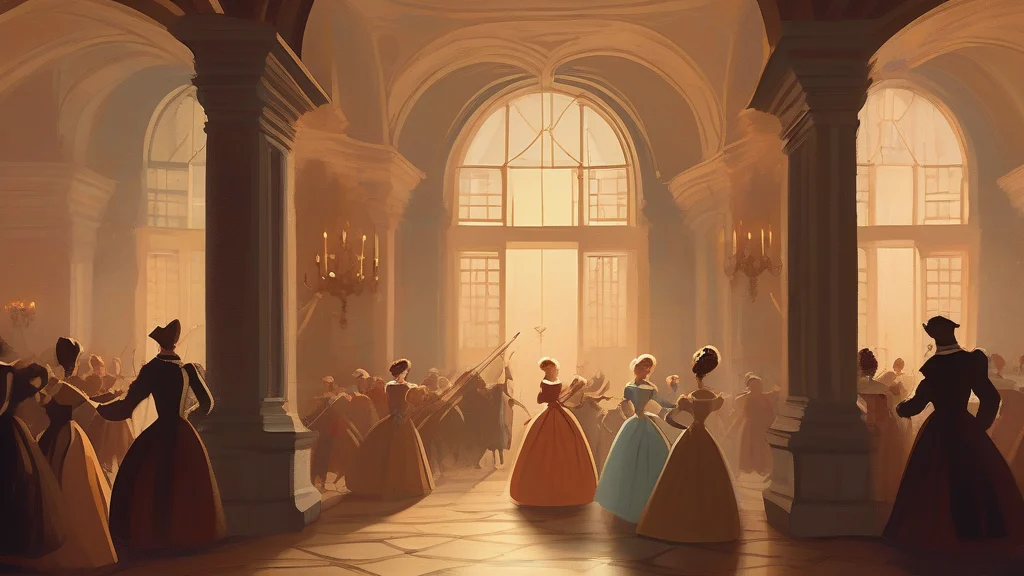
A courtly French dance of the 16th and 17th centuries in moderate triple time, marked by running steps.
"The couple performed a graceful courante before the assembled court."
Also refers to the corresponding movement in a Baroque suite, typically the second movement.
A piece of Baroque instrumental music, especially the second movement of a suite, written in the style and metre of the courante dance.
"Handel's suite opens with an allemande followed by a brisk courante."
Standard plural, formed by adding -s; used when referring to multiple dances or movements.
"The anthology collects courantes by several seventeenth-century composers."
Bach put one at the heart of nearly every keyboard suite he wrote — the courante was Baroque music's favourite way to get moving.
Reviewed by Deb Chak, Editor. AI-assisted content curated by RJS Tech Solutions LLP.
Etymology of courante
The word 'courante' comes from the French courante, literally 'running', the present participle feminine form of courir, meaning 'to run'. Courir itself descends from Latin currere, 'to run', which also gives English words such as 'course', 'courier', and 'corridor' via related routes. The term entered English in the late sixteenth or early seventeenth century as the dance became popular at European courts.
How courante is actually used
Primarily encountered in musicology, dance history, and discussions of the Baroque suite; not part of everyday vocabulary. The plural is 'courantes'.
Easily confused with courante
'Current' means flowing or presently occurring, while 'courante' is a historical dance and musical form.
'Coranto' is an older English spelling and variant of the same dance, but it can also refer to a type of early newspaper; 'courante' specifically denotes the dance and its musical setting.