
What does gigue mean?
A gigue is a lively dance closely related to a jig and, in music, the name of a brisk instrumental dance movement, especially one associated with the Baroque repertory. Its rhythm creates a strong sense of propulsion and bounce, making it well suited to energetic melodies and dancing. The term also has a specialized horological meaning: a toothed wheel within a clock or watch mechanism. Although a gigue and a jig are closely related, a gigue is more specifically associated with the jig-derived dance and its Baroque repertory. In a typical Baroque suite, it commonly appears as the final movement, following slower dances. For general readers, however, the musical and dance meanings are much more familiar than the mechanical one. Gigue is a useful example of how a word borrowed from French can become closely identified with a particular historical style while retaining a technical meaning in another field.
nounA lively jig-like dance, especially the dance movement of that name in Baroque music. In horology, a toothed wheel in the mechanism of a clock or watch.
- A lively jig-like dance, particularly a dance movement in Baroque instrumental music.
- A toothed wheel in the mechanism of a clock or watch.
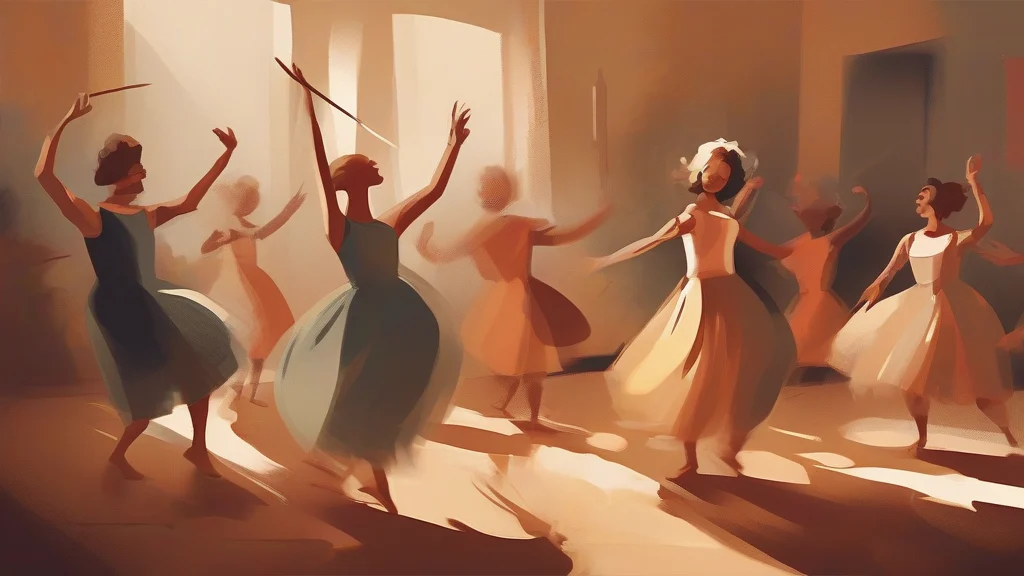
"The suite ended with a sprightly gigue that sent dancers across the floor."
"The suite ended with a sprightly gigue that sent dancers across the floor."
"In the watchmaker's notes, the worn gigue was removed and replaced."
The plural is rare and is used mainly when referring to distinct dances or movements of this type.
"The program paired two gigues by composers from different periods."
The gigue is the jig’s Baroque cousin: a brisk dance whose music often seems to bounce with wit and swagger.
Reviewed by Deb Chak, Editor. AI-assisted content curated by RJS Tech Solutions LLP.
Where does gigue come from?
English borrowed the word from French gigue, which comes from Italian giga, an old name associated with a jig-like dance. The Italian word is related to gig, an old term connected with a fiddle or jig, reflected in the close cognates gig and jig. The French-derived English form became especially prominent as the name of a lively Baroque dance and instrumental movement.
How gigue is actually used
The dance and musical sense is dominant in modern English. The horological sense is uncommon and restricted to specialist discussion of clock and watch mechanisms.
Easily confused with gigue
A jig is the broader name for a lively triple-metre dance, while a gigue is a particular jig-derived dance and Baroque movement.