What does courbette mean?
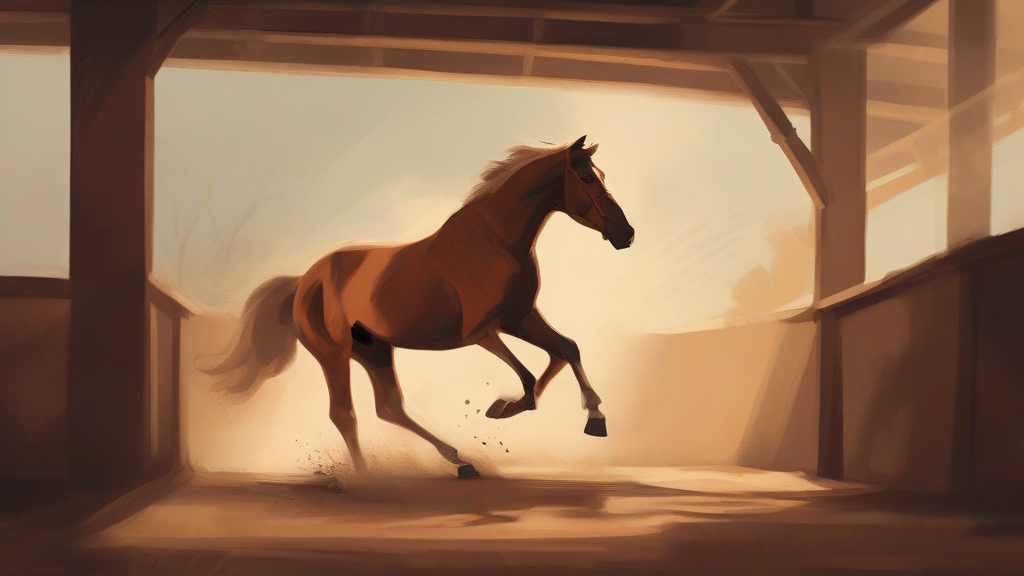
A courbette is a highly disciplined equestrian movement in which a trained horse raises itself onto its hind legs and performs a sequence of short, controlled leaps forward, keeping its forelegs tucked. It belongs to the group of advanced dressage figures historically known as the 'airs above the ground,' skills once valued in warfare because they allowed a mounted rider to rise above infantry and see or strike over their heads. Today the courbette is performed mainly at classical institutions such as the Spanish Riding School in Vienna and in high-level dressage displays, where it is prized as a demonstration of balance, strength, and harmony between horse and rider. The word derives from French courbette, related to courber, 'to bend,' reflecting the horse's curved posture during the movement. Beyond the arena, the term is occasionally used loosely for any spirited bound made by a horse on its hind legs, giving it a vivid, graceful association with the athleticism and artistry of the trained horse.
nounA movement in classical horsemanship in which the horse rears up on its hind legs and makes a series of small leaps forward. More broadly, any similar springing bound made while balanced on the hind legs.
- A controlled dressage movement in which the horse raises its forehand and executes successive small leaps on its hind legs.
- A similar springing bound or caper made by any animal or person while on the hind legs.
"The Lusitano stallion executed three perfect courbettes down the centerline, to gasps from the audience."
"In the Spanish Riding School's courtyard, white Lipizzaners performed courbettes with almost weightless precision."
"Startled by the horn, the young colt threw an excited courbette before bolting across the paddock."
Standard plural, following regular English pluralization; used when referring to repeated movements or multiple performances.
"The finale featured a series of courbettes along the arena's long side."
The courbette isn't a horse being naughty — it's one of the 'airs above the ground,' battle moves once taught so mounted riders could strike over infantry.
Reviewed by Deb Chak, Editor. AI-assisted content curated by RJS Tech Solutions LLP.
Etymology of courbette
Courbette comes directly from French, where it denoted the same equestrian leap; it is derived from courber, 'to bend or curve,' which traces back through Vulgar Latin forms to Latin curvare, 'to bend.' The underlying root is the Latin adjective curvus, 'bent or crooked,' which also gives English words such as curved, curvature, and corbel. The word entered English usage alongside other terms of horsemanship borrowed from French riding traditions.
How courbette is actually used
A technical term of equestrianism and dressage, encountered chiefly in writing about classical riding, horses, or heraldic and artistic depictions of them. It carries a refined, specialized connotation rather than everyday usage.
Easily confused with courbette
A corvette is a small fast warship (or a Chevrolet sports car), whereas a courbette is a leaping rear performed by a trained horse.
A curvet is a broader term for a horse's playful leap or prance on its hind legs; courbette refers specifically to the formal dressage movement of repeated small bounds while rearing.