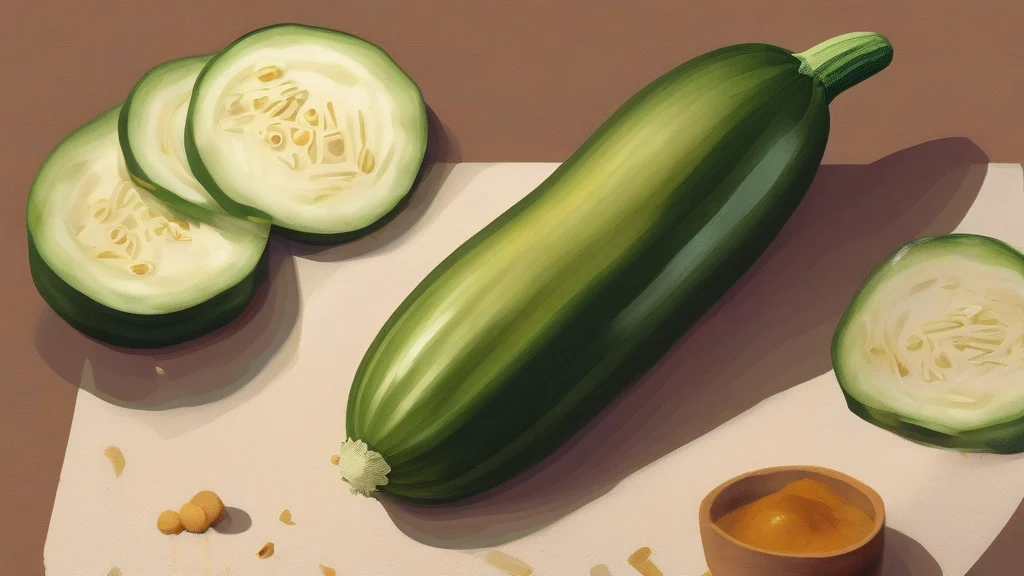
What does courgette mean?
A courgette is the small, immature fruit of a variety of the gourd plant Cucurbita pepo, picked while its skin is thin and its flesh tender enough to be eaten whole. It is the standard term in British, Irish, Australian and New Zealand English for what North Americans know as the zucchini, and the two names refer to exactly the same vegetable at the same stage of growth. Courgettes have a mild, slightly sweet flavour that absorbs oils, herbs and seasonings readily, making them a fixture in Mediterranean-style cooking — grilled, fried, grated into fritters, or shaved into raw salads. Left to mature on the plant, a courgette swells into a large marrow with tougher skin and coarser flesh, which is why gardeners joke about the crop's tendency to produce gluts faster than anyone can cook them. Botanically the courgette is a fruit rather than a vegetable, but culinary convention treats it firmly as the latter.
nounA courgette is a small, immature marrow or zucchini, an elongated green summer squash harvested while still young and tender. The term is the standard British English name for what Americans call a zucchini.
- The small, edible green fruit of Cucurbita pepo, harvested immature and cooked as a vegetable.
"She sliced the courgette into thin ribbons and tossed it with olive oil and lemon."
"Grill the courgettes until lightly charred, then drizzle with garlic oil."
"His allotment produced more courgettes than he could possibly eat by August."
The standard plural adds -s: 'courgettes'. When used as an uncountable foodstuff, the singular 'courgette' may stand in for the plural.
"The recipe calls for three courgettes, thinly sliced lengthways."
The courgette isn't just a vegetable — botanically it's a swollen ovary, and left on the plant it can grow into a marrow bigger than your forearm.
Reviewed by Deb Chak, Editor. AI-assisted content curated by RJS Tech Solutions LLP.
Etymology of courgette
Courgette entered English from French, where 'courge' means marrow or gourd; the diminutive suffix '-ette' marks it as the small, young form of that fruit. 'Courge' itself traces back through Old French to the Latin 'cucurbita', the classical word for a gourd, from Greek 'kukurbis'. This makes courgette a direct relative in origin of cucumber-related vocabulary and of words like 'gourd' in their shared cucurbit lineage. The word became established in British English in the twentieth century as the vegetable grew popular in post-war cooking.
How courgette is actually used
Courgette is borrowed from French and is the everyday term in British English, Irish English, Australian English and New Zealand English; American speakers almost always say zucchini. In Britain, courgette refers to the young squash and marrow to its mature counterpart. The plural in British usage is typically 'courgettes', though the singular 'courgette' also appears when referring to the vegetable as a foodstuff.
Easily confused with courgette
A courgette is the young, small form of the same plant, while a marrow is the fully grown, large mature fruit with coarser flesh and thicker skin.