
What does crabbiness mean?
Crabbiness is the noun form of crabby, naming an irritable, grouchy, or easily annoyed temperament or mood. A person showing crabbiness may snap at small annoyances, complain readily, or seem generally out of sorts, though the word suggests peevishness rather than genuine anger or hostility. It appears most often in informal contexts — describing a tired child, a colleague before coffee, or anyone having a bad day — and its slightly playful tone makes it gentler than terms like hostility or bitterness. The word belongs to a family built on 'crab', a creature whose sideways walk and defensive pinching have long served English as a metaphor for contrariness and ill temper. Related forms include the adjective crabby and, with a distinct meaning, the older crabbed, which describes difficult or obscure qualities rather than mood. Crabbiness endures because it captures a universal, everyday human state with warmth and a touch of humor.
nounThe quality or state of being irritable, grouchy, or easily annoyed; an ill-tempered or peevish disposition.
- An irritable, grumpy disposition or mood.
- A temporary state of ill temper (as in someone's crabbiness on a given day).
"His morning crabbiness faded as soon as the coffee kicked in."
"The toddler's crabbiness was blamed on a missed nap."
"Despite his usual crabbiness, he softened when the grandchildren arrived."
Rarely used; crabbiness is almost always treated as a single quality or state rather than counted in plural.
"The novel catalogues the various crabbinesses of its aging narrator."
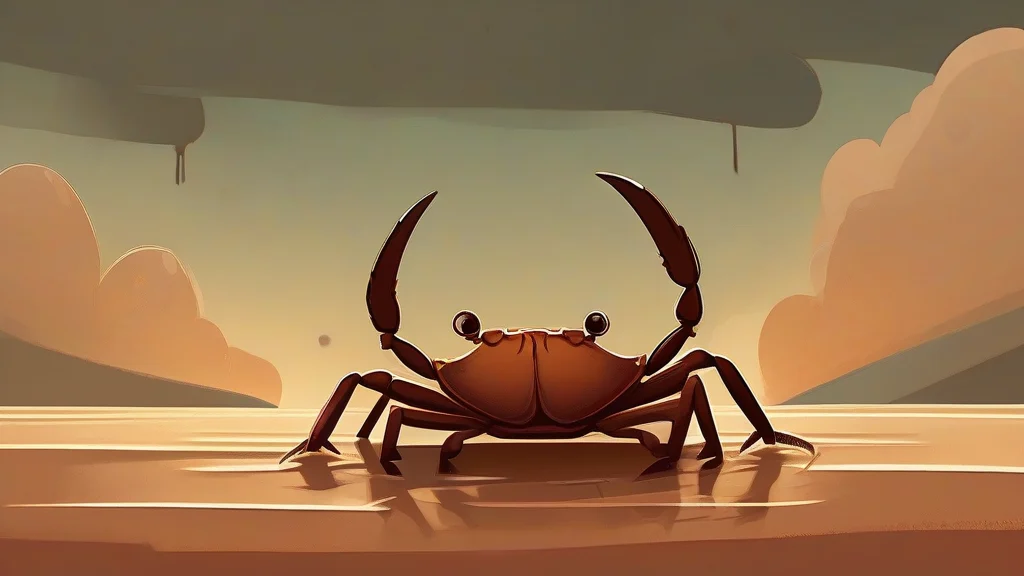
The 'crab' in crabbiness isn't the seafood — it's the creature's famously sideways scuttle and pugnacious pinch that gave us centuries of words for bad moods.
Reviewed by Deb Chak, Editor. AI-assisted content curated by RJS Tech Solutions LLP.
Etymology of crabbiness
Crabbiness derives from crabby, itself formed from the noun crab, the crustacean, whose pincer-claws and sideways gait inspired figurative senses of crookedness and ill temper dating back to Middle English. The adjective crabby arose in American English in the nineteenth century as a variant of the earlier crabbed, which had long meant both 'difficult to read or understand' and 'peevish'. The suffix -ness then produced this abstract noun denoting the quality itself. Cognate expressions built on 'crab' appear throughout Germanic languages, all drawing on the same animal imagery.
Related word forms
How crabbiness is actually used
Informal to neutral in register — common in everyday speech and light writing, less common in formal prose. It carries a mildly humorous, forgiving connotation: it names a bad mood without implying deep malice. Often used for children, the elderly, or anyone short on sleep.
Easily confused with crabbiness
Crabbedness means stubborn, difficult, or hard-to-read qualities (originally of handwriting or style), whereas crabbiness refers simply to irritability and bad temper.