
What does crabwise mean?
Crabwise is an adverb describing movement or orientation that is sideways rather than forward, in imitation of a crab's distinctive lateral gait. A vehicle may back crabwise into a parking space, or a climber may edge crabwise along a ledge. By extension, the word is used figuratively to characterize any indirect, cautious, or evasive approach to a goal: a government might move crabwise toward reform, advancing without ever committing to a direct path. The word belongs chiefly to descriptive and literary prose—nature writing, reportage, and political commentary—where its crustacean image lends vividness and a hint of wariness. Its connotation is rarely neutral: to act crabwise suggests hesitancy, obliqueness, or a reluctance to confront something head-on. Formed transparently from the noun "crab" plus the suffix "-wise," meaning "in the manner of," it remains immediately intelligible even to readers encountering it for the first time, making it a compact, expressive alternative to plain "sideways."
In the manner of a crab; sideways or laterally.
"The lobster backed crabwise out of the crevice."
Most often used of physical lateral movement.
Indirectly, cautiously, or evasively; without approaching a subject or goal head-on.
"She approached the delicate topic crabwise, circling it before naming it."
Figurative use, common in political and journalistic prose.
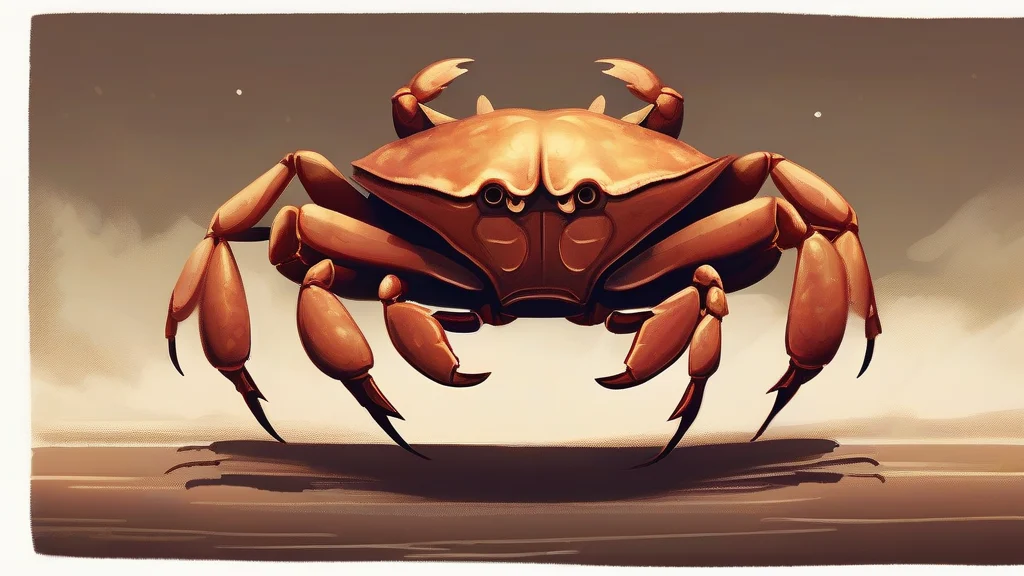
Crabs can't walk forwards, so when a person 'moves crabwise' toward a goal, English is borrowing the crustacean's sidestep to describe progress that gets there without ever heading straight at it.
Reviewed by Deb Chak, Editor. AI-assisted content curated by RJS Tech Solutions LLP.
Etymology of crabwise
Crabwise is formed within English from the noun "crab," which descends from Old English ċreaǣᴡær? no — from Old English “crabba,” combined with the adverbial suffix “-wise.” That suffix comes from Old English “wīse,” meaning “manner, way,” the same word that gives us “wise” and underlies compounds such as “otherwise,” “likewise,” and “clockwise.” The pattern “noun + -wise” (“-crabbed manner”) has been productive in English for centuries, so “crabwise” fits a long-standing native formation rather than borrowing. Cognates of the “-wise” element appear in other Germanic languages, such as German “Weise” (“manner”).
How crabwise is actually used
Somewhat literary or descriptive in register; common in nature writing, journalism, and figurative prose about politics or negotiation. It carries a connotation of caution, awkwardness, or deliberate indirection rather than straightforward progress.
Easily confused with crabwise
"Crabbed" describes something irritable or (of handwriting) cramped and hard to read, while "crabwise" describes sideways movement or an indirect approach.