What does craquelure mean?
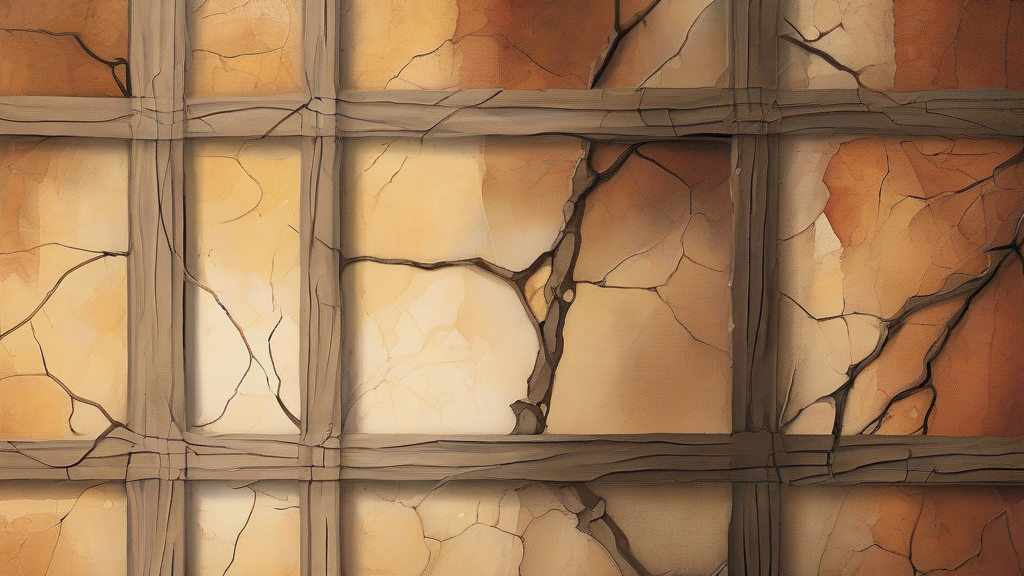
Craquelure is the network of fine cracks that gradually develops in the paint or varnish layer of a painting as it ages. It arises because paint and ground dry and contract at different rates over time, so the surface fractures into a distinctive web of hairline lines. Far from being dismissed as mere damage, craquelure is studied closely by art historians and conservators: its pattern, density, and depth vary with the materials, techniques, and climate a work has experienced, making it a valuable clue to authenticity and condition. The term is chiefly encountered in art conservation, auction catalogues, and museum contexts, and it is borrowed directly from French. Forgers find convincing craquelure notoriously difficult to fake, since true examples take decades or centuries to form naturally.
nounA network of fine cracks that develops in the surface of old paintings, particularly in the layers of paint or varnish, as a result of aging and drying.
- The characteristic network of fine cracks that appears in the paint or varnish layer of an aged painting or other painted surface.
"The restorer examined the delicate craquelure across the canvas to confirm the painting's age."
"Under magnification, the craquelure formed a spiderweb of fine lines across the varnish."
"Art forgers often struggle to reproduce authentic craquelure, which takes decades or centuries to develop."
Usually treated as an uncountable mass noun referring to the crack network on a single work; the plural appears mainly when discussing multiple works or distinct areas of cracking.
"Both panels show extensive craquelures consistent with their sixteenth-century origin."
The tiny web of cracks on an Old Master's surface isn't damage to hide — it's a fingerprint of time that conservators actually study to authenticate a painting.
Reviewed by Deb Chak, Editor. AI-assisted content curated by RJS Tech Solutions LLP.
Etymology of craquelure
The word comes from French craquelure, derived from craquer, meaning to crack or creak, which ultimately traces back through Middle French. It entered English usage in the nineteenth century as interest in connoisseurship and the technical study of Old Master paintings grew, retaining its French spelling unchanged. Its root connects it to other French-derived words built on the idea of cracking, such as craquelé, describing a deliberately crackled glaze in ceramics.
How craquelure is actually used
A specialist term used chiefly in art history, conservation, and connoisseurship; rare in everyday speech. It carries neutral-to-positive connotations among experts, since genuine craquelure can attest to a work's age.
Easily confused with craquelure
Crackle is a general term for a pattern of small cracks or a crackling sound, while craquelure refers specifically to the network of cracks that forms naturally in aged paint or varnish on artworks.