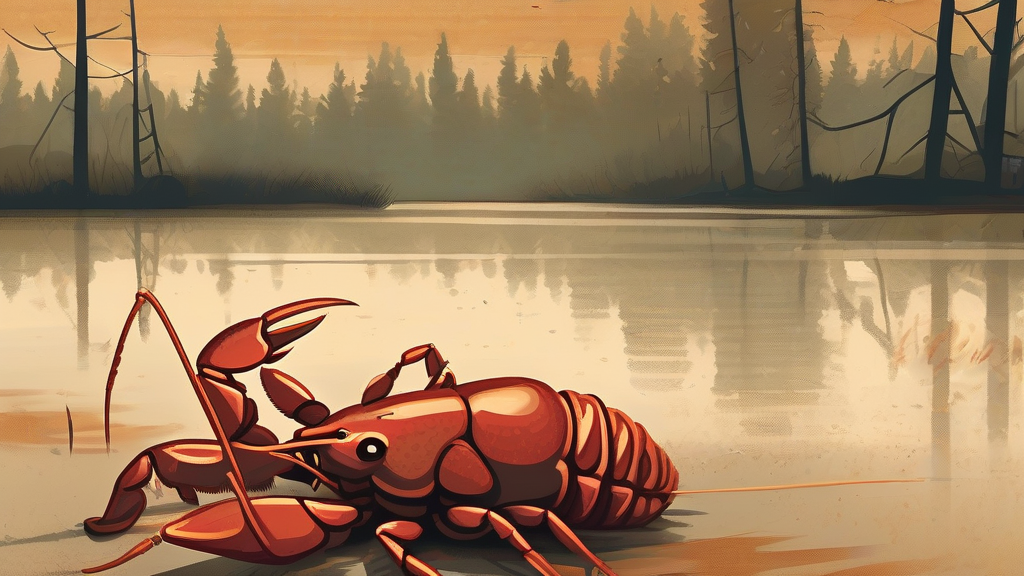
What does crawfish mean?
Crawfish is a noun referring to a small freshwater crustacean that resembles a miniature lobster, found in rivers, streams, and lakes across much of the world. In the United States, particularly Louisiana and the broader South, crawfish hold real cultural weight as food, starring in communal crawfish boils seasoned with spices and served alongside corn and potatoes, as well as in dishes like étouffée and gumbo. The naming of this creature is famously fluid: Americans in the South say crawfish, much of the rest of the country says crayfish, and Westerners often say crawdad or crawdaddy — all labels for the same animal. The word also functions informally as a verb, chiefly in American English, meaning to back out of a promise or retreat from a position, as when someone 'crawfishes' on a commitment. This dual life as both beloved delicacy and metaphor for backing away gives the word a distinctive place in American vocabulary, blending regional flavor with everyday idiom.
A small freshwater crustacean resembling a lobster, with a segmented body and large front claws, commonly caught for food.
"Fishermen waded into the creek to check their crawfish traps."
Plural is typically 'crawfish' unchanged; 'crawfishes' occurs but is less common.
(Informal, chiefly US) To withdraw from a commitment or retreat from a previously held position; to back out.
"She agreed to lead the project, but crawfished once the workload became clear."
Almost always used negatively to suggest unreliability; common construction is 'crawl/crawfish out of something'.
The plural is usually identical to the singular, following the pattern of other mass-like food terms; 'crawfishes' exists but sounds formal or unusual.
"The market sells live crawfish by the sack during boil season."
'Crawfish' began as a folk mishearing of an old French word for a tiny lobster — and centuries later it still refuses to be pinned down, spelling itself as crayfish, crawdads, or mudbugs depending on where you stand.
Reviewed by Deb Chak, Editor. AI-assisted content curated by RJS Tech Solutions LLP.
Etymology of crawfish
The word traces back to Middle English crevis, borrowed from Old French crevice, which itself derived from a Germanic root related to the word 'crab'. Over time, English speakers reshaped the unfamiliar ending by association with 'fish', producing the modern forms crawfish and its twin crayfish. The French original survives in another guise as 'crevice', making that word a distant relative. The verb sense of retreating emerged later in American English, presumably by image of the creature scuttling backward.
How crawfish is actually used
Regional naming varies widely within English: 'crawfish' predominates in the American South, 'crayfish' elsewhere in the US and in British usage, and 'crawdad' or 'crawdaddy' in parts of the American West and Midwest. The verbal use ('to crawfish') is distinctly American and informal, often carrying a slightly disapproving tone about someone's reliability.
Easily confused with crawfish
Crayfish is simply the standard British and general variant of the same animal; 'crawfish' is the form favored in the American South, so the difference is regional rather than one of meaning.
Shrimp are mostly marine crustaceans with slender bodies, while crawfish are freshwater creatures with a lobster-like form including large front claws.