
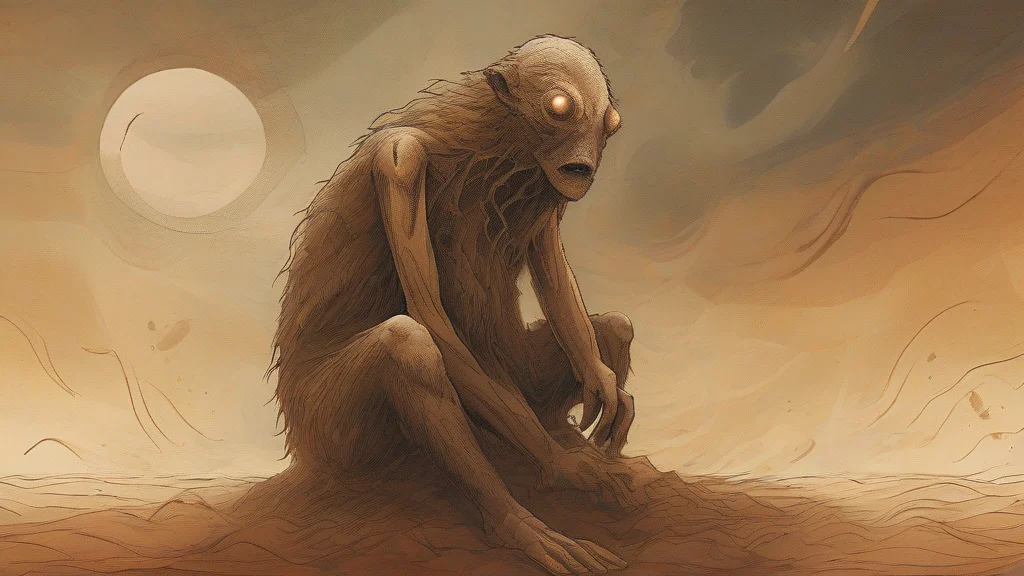
What does creaturely mean?
"Creaturely" is an adjective describing anything that pertains to a creature — a being that has been created rather than existing uncreated. It has two main uses. In ordinary and literary contexts, it evokes the embodied, instinctive, vulnerable side of living things, as when a writer attends to a character's creaturely needs for warmth, rest, and food. In theology and philosophy, the term is more technical: "creaturely" marks the essential distinction between the Creator and everything made, emphasizing finitude, contingency, and dependence on God. Derived from "creature," which entered English through Old French from the Latin "creatura" (a thing created), the word inherits the sense of "creation" at its root. Though rare in casual conversation, it is valued in scholarly writing precisely because it names something otherwise hard to express: the shared condition of being a made, mortal, embodied being.
adjectiveOf or relating to a creature or creatures; characteristic of beings that have been created. In theology and philosophy, it specifically describes the condition of created beings as dependent on, and distinct from, God the Creator.
- Relating to or characteristic of a creature or created being.
- (Theology/philosophy) Describing the condition of created beings as finite and dependent on their creator.
"The theologian argued that prayer is an expression of our fundamental creaturely dependence on God."
"There is something moving in the novel's attention to small, creaturely comforts — food, warmth, shelter."
"For Aquinas, all creaturely goodness is a participation in the goodness of God."
"Creaturely" sounds like it belongs to a fantasy novel, but it's one of theology's most precise words — capturing what it means to be a made thing in a world with a Maker.
Reviewed by Deb Chak, Editor. AI-assisted content curated by RJS Tech Solutions LLP.
Etymology of creaturely
"Creaturely" is formed from "creature" plus the adjectival suffix "-ly." "Creature" came into English via Old French "creature" from the Latin "creatura," meaning a created thing, derived from the verb "creare" (to create or bring forth), which traces back to the Proto-Indo-European root *ker- (to grow). The adjective arose later, gaining particular currency in religious and philosophical writing where the contrast between the divine and the creaturely mattered most. Its relatives include "create," "creation," "creative," and "creator."
How creaturely is actually used
"Creaturely" is a literary and scholarly word rather than an everyday one. It appears most often in theology, philosophy of religion, and literary criticism, where it carries a tone of humility about human finitude. Outside those contexts it can simply mean animal-like or bodily.
Easily confused with creaturely
Creatively means in a way that involves imagination or originality, while creaturely relates to being a created being; they differ by a single letter but share no meaning.