What does creekside mean?
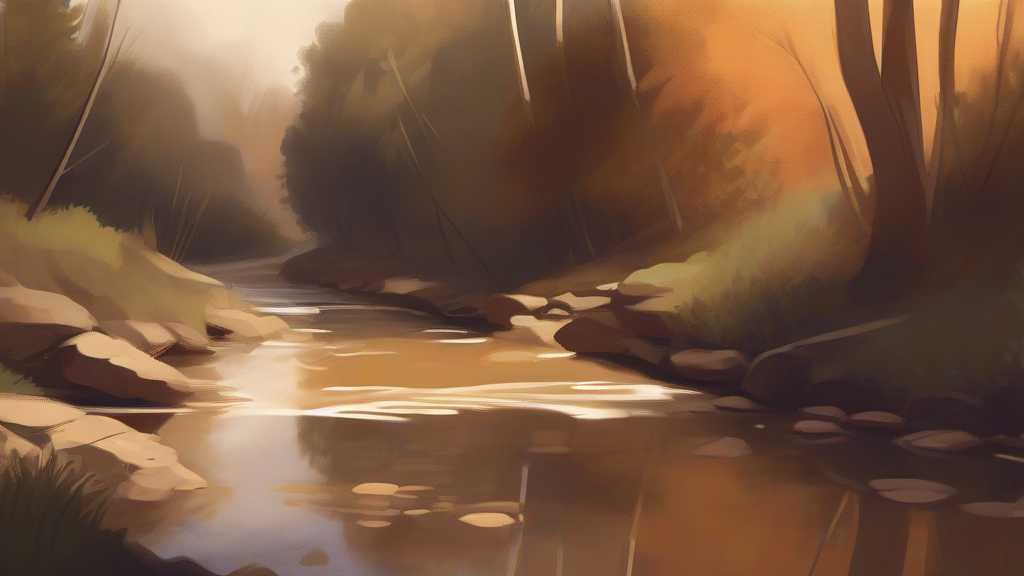
Creekside refers to the land lying immediately alongside a creek — the strip of ground forming a small stream's bank or edge. It is most frequently used attributively, modifying nouns to situate them by the water: a creekside cottage, a creekside trail, creekside seating at a restaurant. The word belongs to a productive family of locational compounds built on '-side', such as riverside, seaside, hillside, and roadside, all denoting position relative to a natural or man-made feature. Creekside carries a distinctly bucolic connotation, evoking shade trees, quiet water, and leisurely recreation, which makes it a favourite in property descriptions, park signage, and nature writing. While widely understood throughout the English-speaking world, it is especially at home in American English, where 'creek' commonly means a modest inland stream; in Britain, where 'creek' tends toward tidal inlets, the compound appears less often. As both noun and modifier, it offers writers a compact, evocative way to anchor a scene at the water's edge.
nounThe land or area alongside a creek; the bank or edge of a small stream.
- The land, bank, or ground immediately adjacent to a creek.
"They spread a blanket on the creekside and watched the herons fish at dusk."
"The wedding reception was held on the creekside beneath a canopy of willows."
"Developers snapped up every available creekside lot in the valley."
"A narrow path runs along the creekside for most of its length."
Rarely pluralized, since reference is usually to a single creek's edge; the plural appears mainly when contrasting several distinct creeks.
"The survey covered creeksides across three counties."
"Creekside" pairs Old Norse and Old English in a single word — the 'creek' sailed over from Viking speech, while the '-side' is pure Anglo-Saxon.
Reviewed by Deb Chak, Editor. AI-assisted content curated by RJS Tech Solutions LLP.
Etymology of creekside
Creekside is a transparent compound joining 'creek' with '-side', on the model of older formations like 'riverside' and 'seaside'. The element 'creek' entered Middle English from Old Norse 'kriki', meaning a bending or nook, reflecting Scandinavian influence on northern English dialects; in America it came to denote any small stream, while in Britain it retained a stronger association with tidal inlets. '-Side' descends from Old English 'sīde', the long-standing English element for marking adjacency. The full compound arose comparatively recently as English speakers extended the established pattern of waterside compounds to smaller watercourses.
How creekside is actually used
Often functions attributively as a modifier (a creekside cabin, creekside dining), much like 'riverside' or 'seaside'. It carries a generally pleasant, pastoral connotation, common in place names, real-estate listings, and nature writing. The word presupposes 'creek' in its American sense of a small stream; in British usage, where 'creek' more often denotes a tidal inlet, the compound is correspondingly rarer.
Easily confused with creekside
A 'crick' is an informal American regional variant of 'creek' (or else a stiff muscle in the neck or back), whereas 'creekside' refers to the land beside the stream itself.
'Creeksides' is simply the plural of 'creekside', referring to multiple banks of different creeks, not a separate word.