
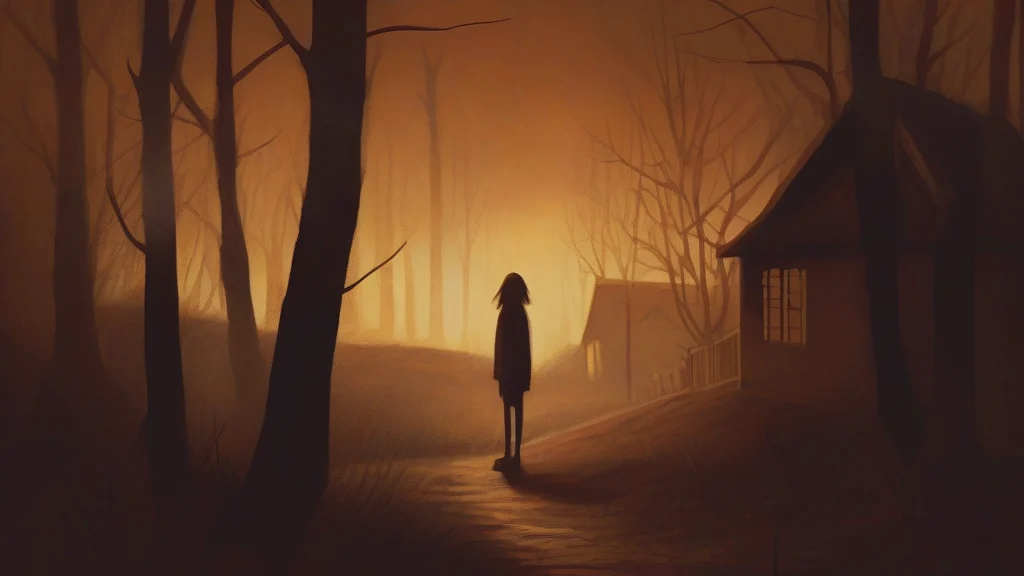
What does creepier mean?
"Creepier" is the comparative form of the adjective "creepy," used to describe something that produces a stronger feeling of fear, unease, or quiet dread than something else. It appears most often when comparing unsettling things — places, people, sounds, or details — as in "the upstairs hallway was even creepier than the cellar." The word belongs to informal and literary registers alike: it thrives in ghost stories, horror films, and casual conversation, but rarely appears in formal technical writing. Its connotation is distinctive: where "scarier" suggests overt fright and "sinister" suggests active menace, "creepier" points to a slow-building, ambiguous discomfort — the feeling that something is subtly wrong. The base word "creepy" derives from "creep," which once meant simply 'to crawl'; the association between crawling movement and unease gave the adjective its modern psychological sense during the nineteenth century. As a comparative, "creepier" is formed regularly by adding the suffix "-er," with "creepiest" serving as its superlative counterpart. It remains a versatile and evocative choice for writers seeking atmosphere over action.
adjective (comparative form of 'creepy')Comparative form of 'creepy': more likely to cause an unpleasant feeling of fear or unease; more unsettling or frightening in a vague, disturbing way.
- More likely to cause fear, dread, or unease than something else; more unsettling or frightening.
"The basement grew creepier the further they descended, its shadows seeming to shift on their own."
"Each floor of the abandoned hotel felt creepier than the one below it."
"The doll's painted smile seemed creepier every time she glanced at it."
'Creepy' originally just meant 'tending to crawl' — it only took on its spine-tingling modern sense in the nineteenth century.
Reviewed by Deb Chak, Editor. AI-assisted content curated by RJS Tech Solutions LLP.
Etymology of creepier
"Creepier" is the comparative of "creepy," an English adjective formed from the verb "creep," which traces back through Middle English "crepen" to Old English "crēopan," meaning to bend the body low or crawl. In its earliest uses, "creepy" described things marked by creeping movement, such as insects or crawling sensations on the skin; the familiar sense of producing eerie dread developed during the nineteenth century. Closely related forms include "creeper," "creepily," and "creepiness."
Related word forms
How creepier is actually used
Informal to neutral register, common in everyday speech, fiction, horror writing, and casual reviews. It carries a connotation of vague, atmospheric dread rather than outright terror, and is typically used for people, places, atmospheres, or details that unsettle without posing explicit danger.
Easily confused with creepier
'Creepie' is a rare informal noun or nickname, whereas 'creepier' is strictly a comparative adjective meaning more creepy.