What does crepuscule mean?
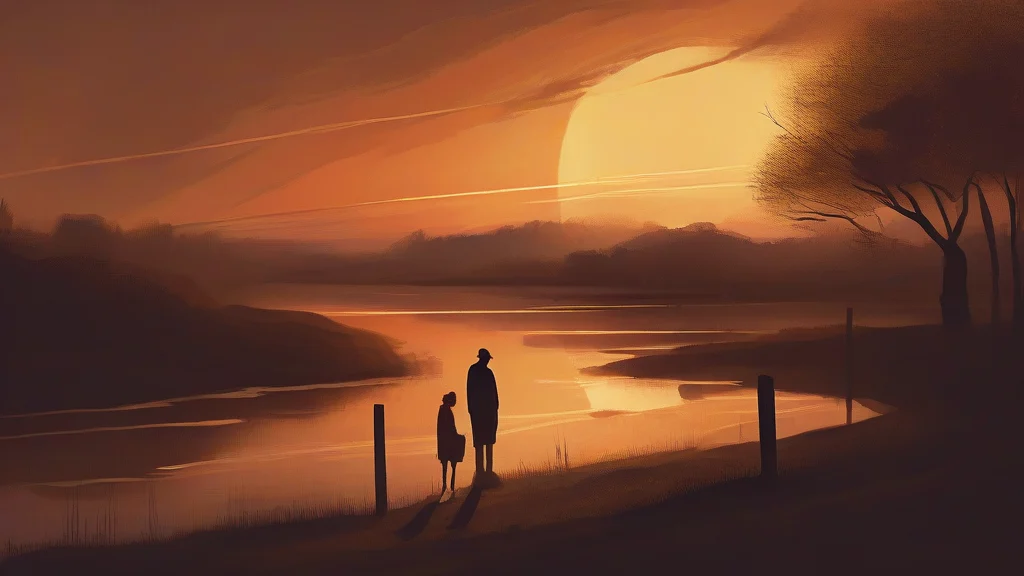
Crepuscule is a literary noun meaning twilight — the soft, fading interval between daylight and darkness at the end of the day. Borrowed into English from French in the early modern period, it derives from the Latin crepusculum, which shares an origin with the adjective crepuscular, used by biologists to describe animals such as deer and rabbits that are most active at dusk and dawn. In ordinary speech, most people simply say twilight, dusk, or gloaming, so crepuscule signals an elevated or poetic register: you are more likely to meet it in novels, essays, and translations than in conversation. Beyond its literal sense, crepuscule can be used figuratively for a period of decline, as in 'the crepuscule of a career' or 'the crepuscule of an empire,' echoing phrases like 'Twilight of the Gods.' Its evocative sound and dusky connotations make it a favourite of writers seeking atmosphere over plainness.
Twilight; the time of day when daylight is fading into night.
"Fireflies emerged as crepuscule fell across the meadow."
Literary register; 'twilight' is the everyday equivalent.
Figuratively, a period of decline or final stage.
"He spent the crepuscule of his life writing memoirs."
Rare; usually used only in figurative senses referring to multiple instances or periods.
"The novel spans the crepuscules of two empires."
Crepuscule is just a fancy French-dressed word for twilight — and it gave us 'crepuscular,' the term biologists use for animals like deer that are most active at dawn and dusk.
Reviewed by Deb Chak, Editor. AI-assisted content curated by RJS Tech Solutions LLP.
Etymology of crepuscule
Crepuscule entered English from French crépuscule in the early modern period. Both trace back to the Latin crepusculum, meaning twilight, which itself is thought to relate to creper, meaning obscure or dark. The same Latin root gives us the adjective crepuscular, now common in biology for organisms active during twilight hours.
Related word forms
How crepuscule is actually used
Crepuscule is literary and somewhat rare; most English speakers would say 'twilight' or 'dusk.' It carries an elevated, poetic register and appears often in translated French literature and formal prose. The plural is rare but attested as 'crepuscules.'
Easily confused with crepuscule
Crepuscular is an adjective describing things active at twilight (like crepuscular animals), while crepuscule is the noun meaning twilight itself.