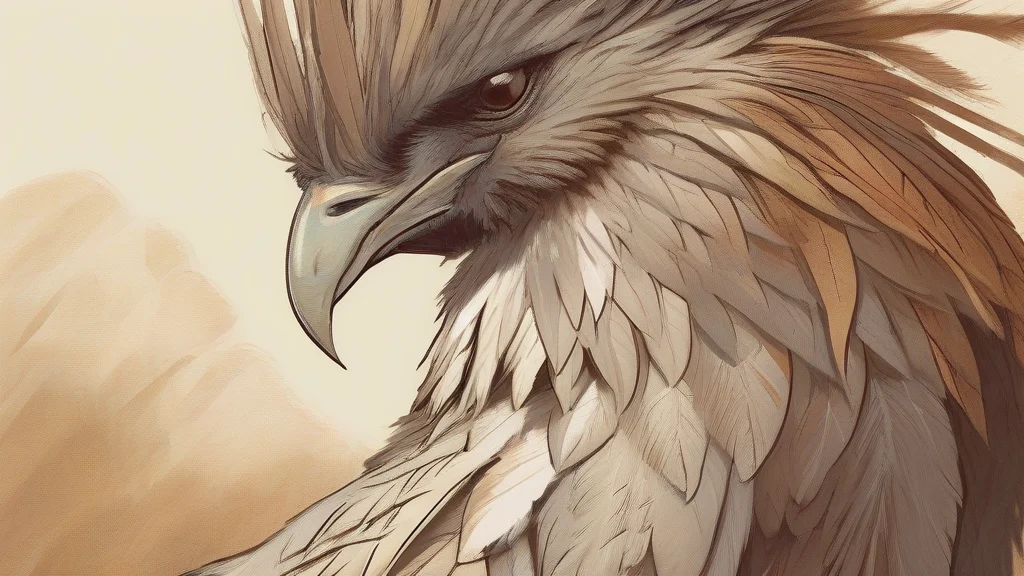
What does crested mean?
Crested is an adjective describing something that bears a crest — a tuft, plume, or crown-like growth on the head, or, by extension, any raised ridge or decorative peak at the top of a thing. Its most familiar use is ornithological: many birds, from the crested tit to the hoopoe, are named for the striking feather crowns they can raise or lower. Beyond birds, the word appears wherever nature or design places a distinguishing top: crested waves curling before they break, hills crested with trees, helmets crested with plumes, and coats of arms bearing heraldic crests. The term carries connotations of distinction and display, since a crest is often what makes a creature or object visually memorable. Derived ultimately from the Latin crista, meaning a tuft or plume such as a cock's comb, crested entered English usage through the older noun crest. It remains a precise, evocative descriptor in both scientific naming and everyday descriptive language.
adjectiveHaving a crest or tuft of feathers, hair, or similar growth on the head; also used more broadly to describe something topped or crowned with a ridge, plume, or decorative peak.
- (Of a bird) having a distinctive tuft or crown of feathers on the head.
- Topped or surmounted by a crest, ridge, plume, or decorative peak, as in waves, helmets, hills, or coats of arms.
"A crested hoopoe perched on the garden wall, its fan-shaped crown fully raised."
"The great crested grebe performs an elaborate courtship dance, shaking its ruff and crest in perfect synchrony."
"They watched the crested waves break white against the harbour wall as the storm rolled in."
That little tuft on a bird's head has been turning heads since the 14th century — the word traces back to the Latin 'crista', the very comb on a rooster's crown.
Reviewed by Deb Chak, Editor. AI-assisted content curated by RJS Tech Solutions LLP.
Etymology of crested
Crested derives from the noun crest, which entered Middle English from Old French creste, itself taken from the Latin crista, meaning a tuft or plume — originally the comb of a bird or the plume worn on a helmet. The adjectival form arose naturally to describe animals and objects possessing such a feature, becoming especially established in natural history writing as ornithology developed formal species names. Its Romance-language cousins share the same root, reflecting the widespread medieval use of crests in both heraldry and armour.
Related word forms
How crested is actually used
Most commonly encountered as a descriptive term in ornithology, where it names many bird species (e.g. crested tit, crested lark). The broader figurative use — describing anything crowned or topped with a peak or plume — appears frequently in literary descriptions of waves, hills, and heraldic designs.
Easily confused with crested
Though visually similar in spelling, 'created' means brought into existence, while 'crested' describes having a crest or being topped with one.