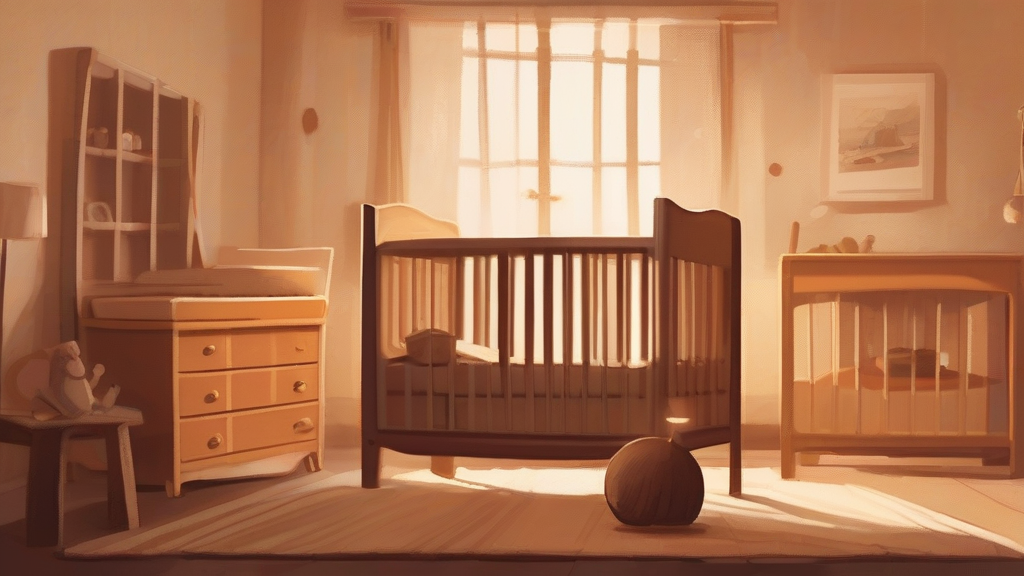
What does crib mean?
A crib is most familiar today as a small bed for an infant or toddler, typically enclosed with high slatted sides to keep the child safe — the standard American term, while British speakers usually say cot. The word's older senses reach back much further: originally an Old English word for a manger or food trough for animals, it survives in rural vocabulary as a corn crib or cattle crib, and in the nativity scene known in Britain and Ireland simply as a crib. Crib has also long carried a figurative meaning: a 'crib' is anything one copies from, whether a smuggled set of answers or a plagiarised passage, and 'to crib' means to copy dishonestly, especially in examinations. In the card game cribbage, the crib is the special four-card hand formed from discards that scores only for the dealer. Informally, a cramped room or shabby dwelling may be called a crib. Few everyday words span cradles, barns, exam cheats, and card tables quite so compactly.
A small bed with high barred sides for a baby or young child; also a manger or enclosed trough for feeding livestock, a bin for storing corn or grain, or (in cribbage) the dealer's discard hand.
"They assembled the crib weeks before the due date, painting the room a soft yellow."
In British English the infant-bed sense is normally expressed by 'cot'; 'crib' for a baby's bed is chiefly American.
To copy another person's work dishonestly or to use unauthorized aids, especially in an examination or assignment.
"Two students were disqualified for cribbing their essays from the same website."
Informal and slightly old-fashioned compared with 'plagiarize' or 'cheat'; common in South Asian and older British usage.
Regular plural; applies to all noun senses, from infant beds to grain bins.
"The day-care center keeps six cribs in its nap room."
Before it was where babies sleep, 'crib' was Old English for a manger — the very word used for the bed of the infant Jesus in a nativity scene, which is why a nativity display is still called a 'crib' in Britain and Ireland.
Reviewed by Deb Chak, Editor. AI-assisted content curated by RJS Tech Solutions LLP.
Etymology of crib
Crib descends from Old English 'cribb', meaning a manger or stall for feeding animals, and is related to similar words in other Germanic languages, such as Dutch 'krib' and German 'Krippe'. Its core sense was always an enclosed receptacle, first for animal feed and later extended to grain storage structures and, from around the seventeenth century, to a child's bed. The sense of copying or cheating arose in the eighteenth century, likely from the idea of consulting a pre-prepared source, and the cribbage sense dates to the game's development in seventeenth-century England. The German cognate 'Krippe' preserves the original manger meaning, famously in 'Weihnachtskrippe', a Christmas nativity scene.
Related word forms
How crib is actually used
In British English, an infant's bed is usually called a 'cot', while 'crib' is the standard American term. In Ireland and parts of northern England, a Christmas nativity scene is traditionally called a 'crib'. The sense of copying in schoolwork ('cribbing') is informal and often carries a mildly disapproving tone.
Easily confused with crib
A crib is a bed or enclosure (or copied work), while a crypt is an underground burial chamber beneath a church.