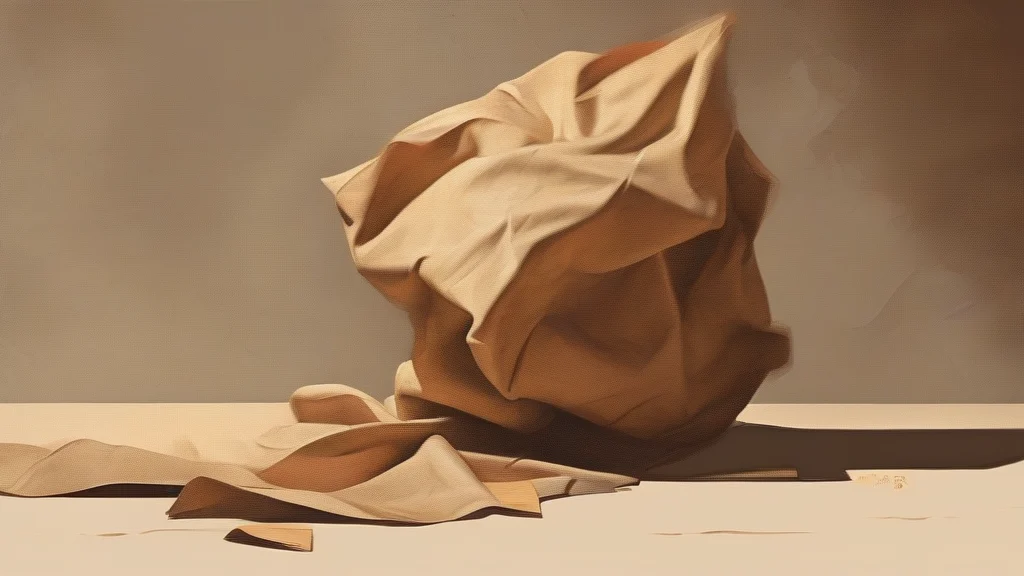
What does crinkled mean?
Crinkled describes a surface covered in many small wrinkles, creases, or puckers — the texture of crushed paper, tinfoil, dried leaves, or crisply pleated fabric. It is most commonly an adjective, though it also serves as the past form of the verb crinkle. The word carries a warm, tactile quality: a crinkled photograph or letter evokes age and sentiment, while someone's crinkled eyes suggest genuine, wholehearted laughter rather than a forced smile. In everyday speech it appears frequently in phrases like crinkled paper, crinkled nose, and crinkled eyes, and it sits comfortably alongside near-neighbours wrinkled, rumpled, creased, and puckered. Where wrinkled typically refers to lines in skin or cloth, crinkled implies an all-over rippling or crispness, making it the natural choice for materials that crackle when handled. Its vividness and gentle connotation make it a favourite of descriptive writers.
Having many small wrinkles, creases, or folds; puckered or rumpled in texture.
"The crinkled cellophane crackled as she unwrapped the gift."
Frequently applied to paper, foil, leaves, and fabric, and figuratively to smiling eyes.
Past form of crinkle: to form or cause to form small wrinkles or folds.
"The heat had crinkled the edges of the photograph."
Crumple a piece of paper and you've created thousands of tiny crinkles — the same texture that makes autumn leaves rustle and gift wrap crackle.
Reviewed by Deb Chak, Editor. AI-assisted content curated by RJS Tech Solutions LLP.
Etymology of crinkled
Crinkled is the participial form of crinkle, a word of Germanic origin recorded in English by the late sixteenth century. It likely arose as a diminutive or frequentative formation related to wrinkle, sharing the Old English and Old Norse lineage of words denoting curled or twisted surfaces. Over time crinkle settled into its modern sense of a small, crisp fold, giving rise to the adjective crinkled and the related descriptor crinkly.
Related word forms
How crinkled is actually used
Often used affectionately for smiling faces and nostalgically for well-worn objects such as letters, photographs, and banknotes; rarely negative except when describing damaged packaging.
Easily confused with crinkled
Wrinkled describes lines in skin or fabric, while crinkled suggests a more all-over puckering or crisp folding of paper, foil, or other material.