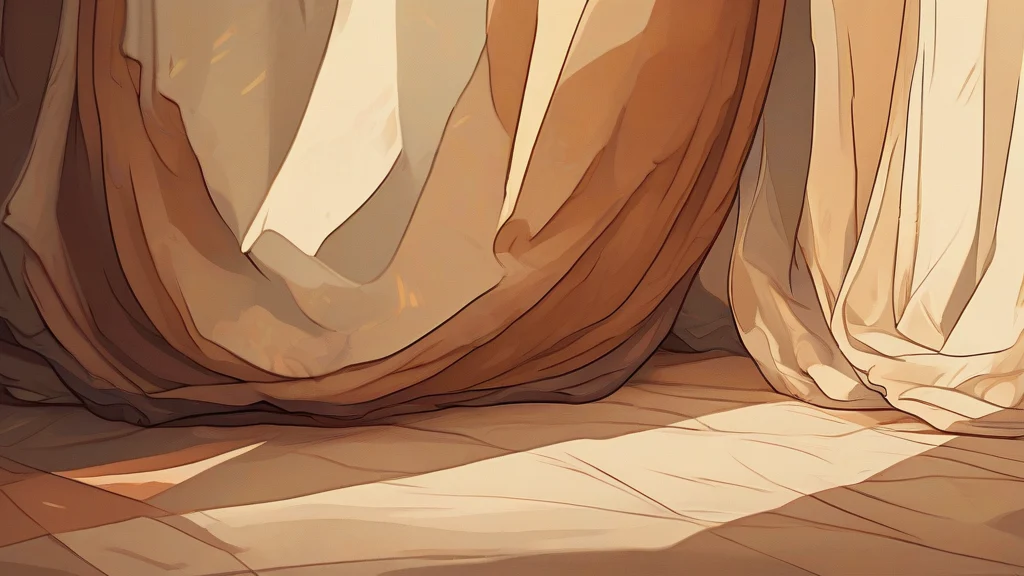
What does crinkly mean?
"Crinkly" is an adjective describing something covered with many small creases, ripples, or wrinkles — the quality you notice in crumpled tissue paper, crushed foil, or tightly waved hair. Unlike "wrinkly," which most often refers to lines in skin or larger folds in cloth, "crinkly" suggests a finer, often crisp texture, frequently accompanied by a distinctive rustling sound. The word derives from "crinkle," itself of Germanic origin, and belongs to an everyday family of texture words alongside "crinkled" and "crease." Its tone is generally light and even endearing: people speak fondly of "crinkly eyes" that crinkle when someone smiles warmly, or the satisfying crinkly feel of a freshly opened package. It is a vivid sensory word, appealing simultaneously to touch, sight, and sound, which makes it especially useful in descriptive writing about materials, textures, and expressive faces.
adjectiveHaving many small creases, wrinkles, or ripples; characterized by an uneven, slightly crumpled texture or surface.
- (Of a surface or material) covered with or full of small creases, wrinkles, or ripples.
- (Of hair) having tight, slightly irregular waves rather than smooth curls or straight strands.
"She smoothed the crinkly wrapping paper before folding it around the gift."
"The old photograph had gone soft and crinkly at the edges after decades in a drawer."
"He smiled with warm, crinkly eyes that suggested he was laughing at some private joke."
The word "crinkly" does more than describe a texture — it evokes a sound: the telltale rustle of cellophane or foil that you can practically hear just reading it.
Reviewed by Deb Chak, Editor. AI-assisted content curated by RJS Tech Solutions LLP.
Etymology of crinkly
"Crinkly" comes from "crinkle," meaning a small wrinkle or twist, which appeared in Middle English and likely traces back to Old English roots connected to bending or curling; its ultimate origin is somewhat uncertain, though it may be related to other Germanic words denoting twisting or winding. The suffix "-ly" here forms an adjective from the noun, following the same pattern seen in "wrinkly." The verb "to crinkle" remains in common use alongside the adjective today.
Related word forms
How crinkly is actually used
"Crinkly" is informal to neutral in register and carries pleasant, often affectionate connotations — it is frequently used of smiling eyes, textured paper, or naturally wavy hair. It describes small-scale creases, so it would not be used for large folds or deep wrinkles.
Easily confused with crinkly
"Wrinkly" describes lines and folds in skin or fabric (especially aging skin), while "crinkly" describes a finer, crispier texture of creases in things like paper, foil, or hair.