What does crooner mean?
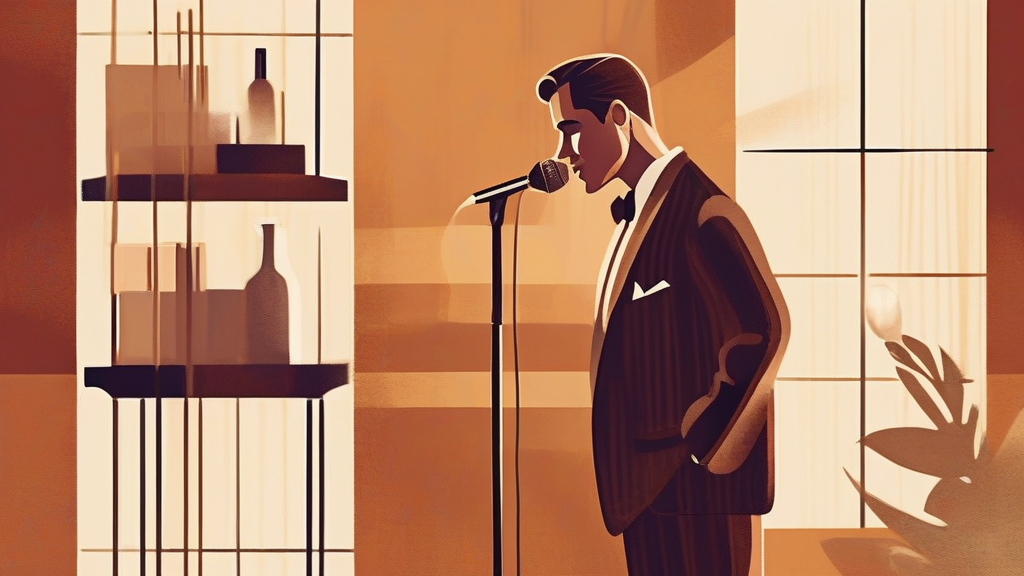
A crooner is a singer — historically almost always a man — who performs popular songs in a soft, intimate, and smooth vocal style, typically leaning on close microphone technique to create a sense of personal warmth. The word emerged in the early twentieth century alongside electric amplification, which allowed vocalists to abandon theatrical belting in favor of a hushed, conversational delivery that sounded as though they were singing directly into each listener's ear. Crooners became cultural icons between roughly the 1930s and 1950s, with figures such as Bing Crosby, Frank Sinatra, and Dean Martin defining the style through romantic ballads and jazz-inflected standards. Today the term is largely retrospective and affectionately nostalgic, applied both to those classic performers and to modern singers of similar temperament. Its enduring association with velvet voices and candlelit romance makes it a vivid shorthand for a whole era of popular music.
nounA crooner is a singer, typically male, who performs popular songs in a soft, intimate style, often with the aid of a microphone. The term is most closely associated with mid-20th-century singers of romantic ballads.
- A singer who performs popular songs in a soft, intimate, low-voiced style, especially one associated with romantic ballads.
"The radio played a classic crooner whose velvety voice filled the room with warmth."
"Frank Sinatra rose to fame as a crooner before reinventing himself as a swing-era icon."
"The wedding band hired a local crooner to serenade guests during dinner."
Standard plural; used when referring collectively to singers of the crooning tradition.
"The station's weekend program features nothing but classic crooners from the 1940s and 1950s."
Before rock and roll, America's biggest heartthrobs didn't scream — they crooned, whispering love songs into microphones so intimately that millions of listeners felt each note was meant just for them.
Reviewed by Deb Chak, Editor. AI-assisted content curated by RJS Tech Solutions LLP.
Etymology of crooner
Crooner derives from the verb croon, which entered English from Middle Dutch or Middle Low German kronen, meaning to lament or to hum softly. The verb was originally associated with low murmuring sounds, including the humming of a mother to her child. In the 1930s, as amplified singing became widespread, crooning came to describe this new intimate vocal style, and crooner followed as its agent noun.
Related word forms
How crooner is actually used
The term carries strong mid-20th-century connotations and is most often applied retroactively to singers like Bing Crosby or Frank Sinatra. It is occasionally used loosely for any smooth-voiced male vocalist of romantic material. While not derogatory, it can sound slightly dated or nostalgic in modern usage.
Easily confused with crooner
A crone is an old woman, often depicted as witch-like in folklore, whereas a crooner is a singer of soft, sentimental songs.