What does crone mean?
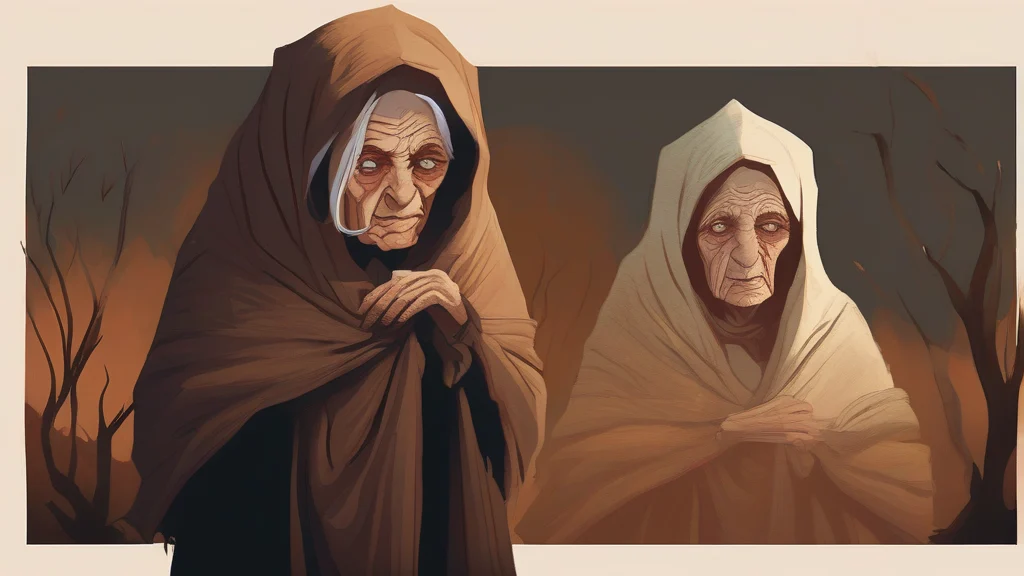
A crone is a withered, witch-like old woman, typically depicted as ugly, malicious, or sinister. The word carries strong negative connotations and is rarely used neutrally: applied to a living person it amounts to a pointed insult about both age and appearance. Its natural habitat is folklore and fantasy, where the crone is a stock character — the hunched figure in the dark forest, the beggar-woman who may be a disguised enchantress. Etymologically, 'crone' derives via northern Middle English from Old North French 'carogne', meaning carrion or the carcass of a slaughtered animal, a reminder that it originated as a term of abuse. Since the late twentieth century, however, the word has undergone a notable rehabilitation: in Wicca and feminist spirituality the crone names the third, aged aspect of the Triple Goddess, celebrated as a figure of wisdom, authority, and acceptance of mortality. Writers should therefore handle the term carefully — evocative in fiction, offensive as description, and affirming only within its reclaimed spiritual sense.
nounA withered, witch-like old woman; a cruel or ugly old woman. The word is strongly pejorative and often used of hags in folklore.
- A cruel, ugly, withered old woman; a witch-like hag.
- In Wicca and neopaganism, the aged aspect of the Triple Goddess, associated with wisdom, death, and endings (reclaimed as a positive figure).
"In the fairy tale, the crone lures the children into her cottage deep in the woods."
"The villagers whispered that the bent old crone at the edge of the moor could curse a crop with a glance."
"Modern pagan traditions honour the crone as the embodiment of hard-won wisdom rather than something to be feared."
Regular plural; used mainly of fictional or folkloric figures, or ironically among women reclaiming the term.
"The story features three crones guarding the bridge over the river."
The word for a witch-like hag likely began life as an insult about a sheep's carcass — and was reclaimed by modern pagans as the wise third face of the Goddess.
Reviewed by Deb Chak, Editor. AI-assisted content curated by RJS Tech Solutions LLP.
Etymology of crone
'Crone' entered English in the late Middle English period, borrowed from Anglo-Norman or Old North French 'carogne', which meant carrion or the carcass of a dead animal and carried contemptuous overtones. It is related to Old Northern French forms such as 'caroigne', from a Gallo-Romance root ultimately tied to Latin 'caro', flesh. Originally an insult implying a repulsive or worthless person, the word narrowed over time to denote specifically a withered old woman. Modern English retains no other common derivatives of this borrowing.
How crone is actually used
Strongly pejorative when applied to real people — calling someone a crone is insulting and ageist. In folklore and fantasy it is a stock figure, often interchangeable with 'hag' or 'witch'. Since the late 20th century, feminist and neopagan writers have deliberately reclaimed the term as an emblem of female elderhood and wisdom, so register depends heavily on context.
Easily confused with crone
A 'crone' is an ugly old woman, while a 'crown' is a royal headpiece or the top of the head.