
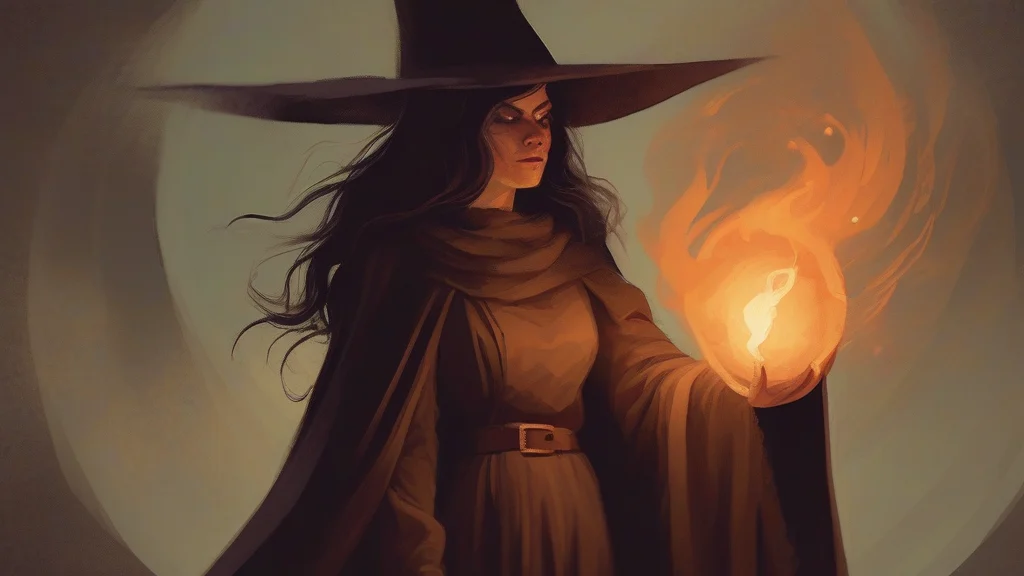
What does witch mean?
A witch is traditionally a woman believed to possess supernatural or magical powers. The word is especially familiar from folklore, fairy tales, children's stories, and popular culture, where witches may cast spells, brew potions, fly, or use supernatural knowledge. In modern English, however, “witch” can also be a hostile label for someone regarded as cruel, wicked, or dangerous, so its meaning can be insulting when used about a real person. The expression “witch hunt” adds another layer, describing a campaign of intense accusation or persecution in which a person or group is treated as harmful. The verb “to witch” means to enchant or bewitch, but it is chiefly literary or archaic today. Together, these uses make “witch” a word that links imaginative supernatural traditions with historical and political language about blame, stigma, and persecution.
A woman believed to possess supernatural or magical powers, especially in folklore and fairy tales. In derogatory modern use, it can mean a cruel, wicked, or unpleasant woman.
"The children were warned never to speak to the witch who lived at the edge of the woods."
The word may be playful or fictional in appropriate contexts, but it can be insulting when applied to a real person. The expression “witch hunt” is usually figurative and refers to a campaign of accusation or persecution.
To enchant or bewitch, especially by magical or supposedly mystical means.
"The old song seemed to witch the listeners into a state of complete silence."
This use is now literary or archaic rather than common in everyday speech.
The standard plural is “witches.”
"The stories of witches who use spells to confuse travelers go back centuries."
From a figure of supernatural power to a modern insult for a nasty woman, “witch” carries a striking mix of folklore, history, and social tension.
Reviewed by Deb Chak, Editor. AI-assisted content curated by RJS Tech Solutions LLP.
Where does witch come from?
The English noun comes from Old English wicce, meaning a female practitioner of magic, while the associated verb developed from forms meaning to enchant or bewitch. These belong to an older Germanic word family and survive in modern derivatives such as witchcraft, witchery, Wicca, and wiccan. Over time, the word acquired hostile figurative senses, especially the disparaging meaning “a cruel or wicked woman,” alongside its older supernatural associations.
Related word forms
How witch is actually used
The noun is neutral or imaginative when referring to a supernatural character, but derogatory when applied to a real woman as an insult. The verb is now uncommon and usually belongs to literary, archaic, or deliberately archaic language.
Easily confused with witch
A witch is a person associated with magic, whereas which is used to ask for information or to connect a clause to a preceding phrase.