
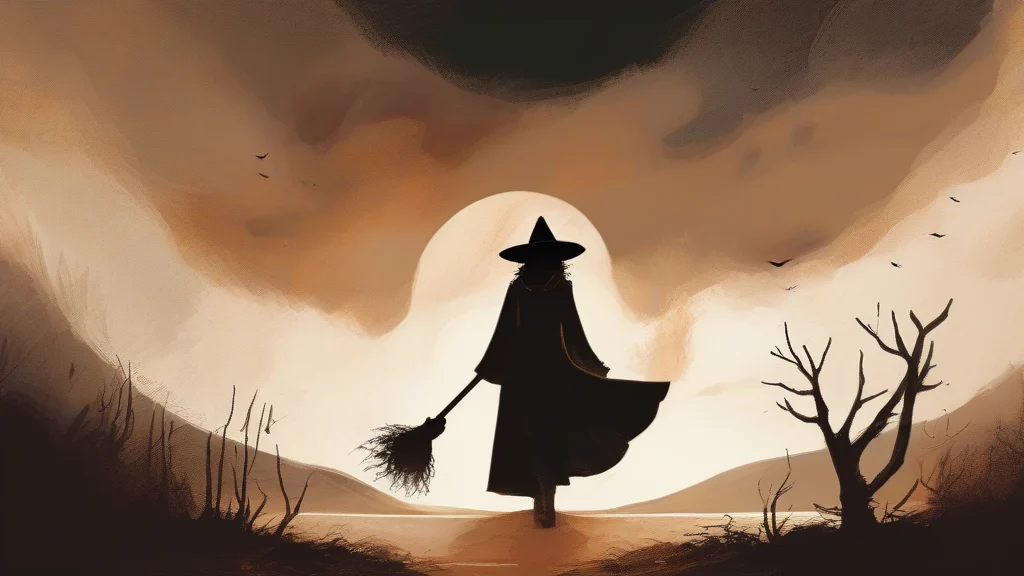
What does witching mean?
Witching is most familiar as an adjective describing things associated with witches or magical practice. The noun witching, less common and more literary, refers to witchcraft itself. As a participial verb form, it can mean practising witchcraft or casting spells. The adjective is especially evocative because it suggests mystery, secrecy, and danger, and it is strongly associated with the traditional night-time setting of supernatural activity. Even when writers use it without overt magic, its atmosphere can make an ordinary moment feel uncanny. The noun and verb senses are now unusual in everyday speech but remain useful in fiction, historical narrative, and discussion of folklore. The word is therefore more than a label for sorcery: it carries a cultural association with mystery and unease. Recognising its adjectival and nominal uses helps readers understand both the traditional phrase for the midnight hours and its more archaic literary associations.
Relating to witches, witchcraft, or supernatural activity.
"An eerie calm settled over the valley."
Most often encountered in literary or atmospheric contexts, especially in the phrase “the witching hour.”
The practice of witchcraft or sorcery.
"The chronicles describe the village's witching as something that began after sunset."
A relatively uncommon and literary noun use.
Practising witchcraft or casting spells.
"They believed that the healer had beenwitching the village."
This is the present participle of witch and is less common than the lexical adjective and noun uses.
In its rare noun sense, witching usually names an activity or practice and is treated as a mass noun.
"The chronicles speak of the witching that took place in the forest."
The “witching hour” has turned midnight into folklore’s favourite time for mystery, mischief, and magic.
Reviewed by Deb Chak, Editor. AI-assisted content curated by RJS Tech Solutions LLP.
Where does witching come from?
Witching was formed from witch by adding the present-participle and gerund suffix -ing. Witch descends from Old English wicce, a term for a woman believed to practise sorcery or magical arts. The same root underlies witchcraft, witchery, and bewitch, which developed through separate English formations.
How witching is actually used
The adjectival and noun uses often have a literary or archaic flavour. The participial verb use is uncommon in modern everyday English, while the adjective remains especially effective for describing an eerie atmosphere.
Easily confused with witching
Witching relates to witchcraft or supernatural magic, whereas winching means hauling or pulling something with a winch.