
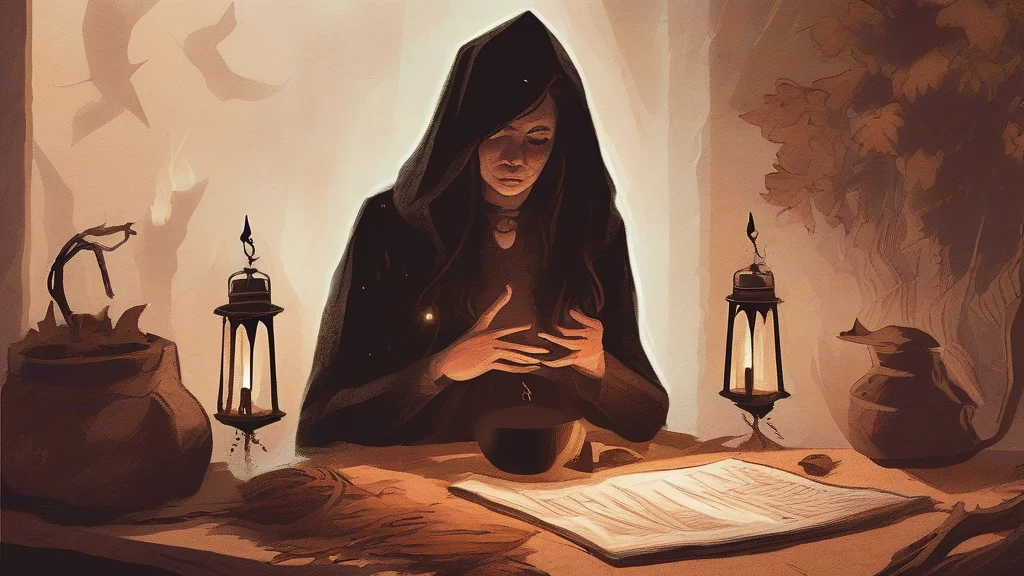
What does witchcraft mean?
Witchcraft denotes the practice or alleged practice of using magic, sorcery, and supernatural powers. The word appears in historical accounts, folklore, religious writing, literature, film, and modern cultural debate, often referring to traditions associated with witches. It can also be used figuratively to describe manipulation, calculated deception, or persuasive political tactics. Its modern connotations are strongly shaped by memories of early modern witch trials, in which accusations could lead to persecution, torture, or execution even without credible evidence. Contemporary practitioners of modern pagan religions generally avoid the word when naming their own traditions, preferring “Witchcraft” or “Wicca.” Witchcraft is also useful for distinguishing historical accusations and supernatural claims from later literary and figurative uses. In fiction, it serves as a familiar symbol of hidden knowledge, moral danger, and power outside accepted social or religious controls.
The practice or supposed practice of using magic, sorcery, or supernatural powers, especially by a witch.
"The manuscript describes forms of witchcraft that varied widely from one region to another."
The term may refer to genuine traditional practices, fictional magic, or alleged supernatural activity that others regarded as witchcraft.
Deceptive, manipulative, or persuasive techniques used to achieve a desired outcome.
"She dismissed the committee's tactics as mere witchcraft."
This figurative use is informal and usually critical or dismissive.
Usually treated as an uncountable noun; the plural is rare and is used for distinct instances or bodies of alleged magical practice.
"The study compares witchcrafts documented in three separate societies."
Early modern witch trials turned fear of the unseen into courtroom procedure, with accusations often mattering more than proof.
Reviewed by Deb Chak, Editor. AI-assisted content curated by RJS Tech Solutions LLP.
Where does witchcraft come from?
Witchcraft is an Old English compound, wiccræft, formed from wicce, meaning “witch,” and cræft, meaning “craft, skill, or art.” The compound continued in Middle English and later developed into the modern form through variants such as witch-craft. Its second element also underlies related English words such as craft, crafty, and craftsmanship, while witchery belongs to the same broader family.
Related word forms
How witchcraft is actually used
Usually uncountable, though “witchcrafts” is occasionally used as a rare plural for distinct instances or bodies of alleged magical practice. The term often carries historical or fictional associations and can sound dismissive when applied to modern pagan traditions; practitioners generally prefer “Witchcraft” or “Wicca” as formal names for those traditions.
Easily confused with witchcraft
Witchcraft emphasizes the practice or craft of using supposed magical powers, while witchery is a broader term for sorcery or supernatural influence.