
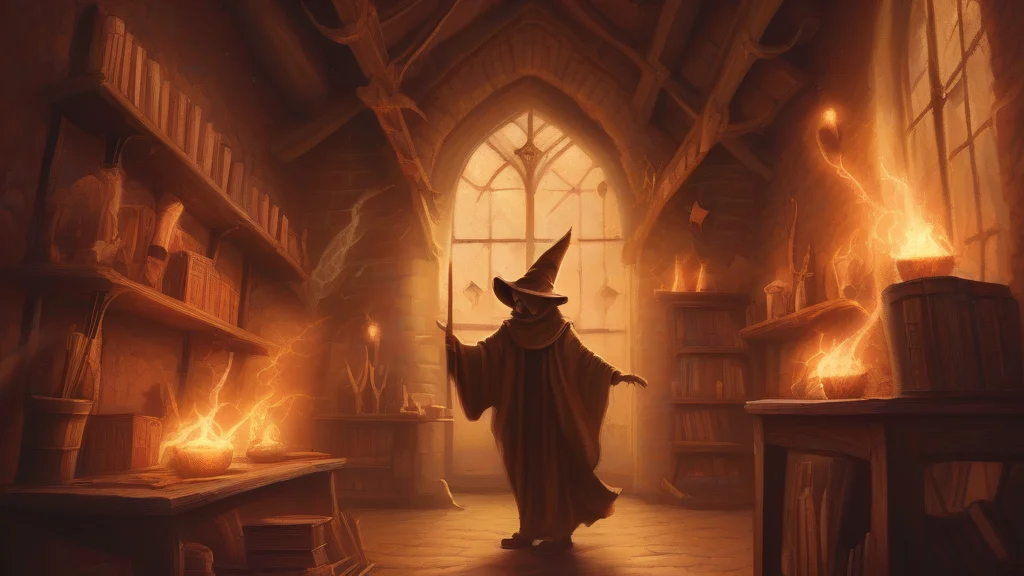
What does wizardry mean?
Wizardry means the art or practice of magic, particularly the casting of spells or use of supernatural powers. In literary, historical, and folklore contexts, it may refer to a complete magical tradition, a particular method of practicing magic, or an individual’s command of magical arts. The word also has a figurative use for exceptional ingenuity: someone solving a complicated problem or manipulating a difficult situation may accomplish it through “wizardry.” This extension draws on the imaginative association between magical powers and extraordinary skill. Wizardry is closely related in meaning to magic, sorcery, and witchcraft, although these terms can carry different cultural and historical associations; witchcraft often emphasizes alleged folk practices or nature magic, while wizardry more directly suggests the practitioner’s skill or the activity of performing magic. Although largely replaced in ordinary speech by “magic,” wizardry remains evocative and distinctive, especially in discussions of fantasy, occult traditions, and historical belief.
nounThe art or practice of magic, especially the use of spells and supernatural powers. By extension, it can mean intricate skill or ingenuity in accomplishing difficult or deceptive tasks.
- The art, practice, or use of magic and supernatural powers.
- Intricate skill, ingenuity, or cunning in performing a difficult or deceptive task.
"The apprentice spent years mastering wizardry before venturing beyond the safety of the academy."
"The apprentice studied wizardry in the tower, learning spells that had been passed down for generations."
"It took real wizardry to untangle the records and reconstruct the missing history."
The plural is uncommon; singular “wizardry” is normally preferred when referring to magic as a whole or as a practice.
"The exhibition brings together two rich and very different wizardries from medieval Europe and Asia."
Wizardry can mean the practice of magic—or the almost magical ingenuity someone brings to a difficult task.
Reviewed by Deb Chak, Editor. AI-assisted content curated by RJS Tech Solutions LLP.
Where does wizardry come from?
Wizardry dates from the late 16th century and was formed from “wizard” with the suffix “-ry.” The word “wizard” developed from earlier forms meaning “wise man” and came to be associated with a person skilled in magic or sorcery. The related forms “wizardly” and “wizardcraft” preserve the same base, while “sorcery” and “witchcraft” are close in meaning but do not share that etymological base.
Related word forms
How wizardry is actually used
Wizardry is used in both British and American English. Its literal sense is common in fantasy, folklore, and historical discussion, while the figurative sense conveys exceptional skill or cunning. The plural is uncommon because wizardry is normally treated as a collective or mass noun.