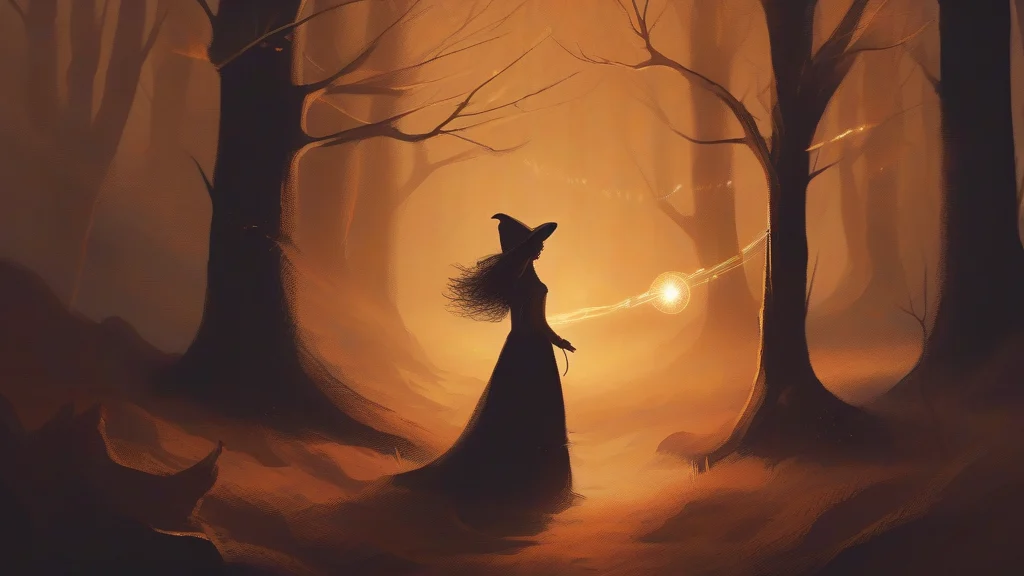
What does bewitch mean?
Bewitch is a verb with two closely related meanings: in its older, literal sense, it means to cast a spell on someone, subjecting them to witchcraft or enchantment; in its far more common modern sense, it means to fascinate or charm a person so completely that they seem held under a magical influence. A captivating performer, a stunning landscape, or an alluring stranger can all be said to bewitch those who encounter them. The word carries a strongly positive, even romantic connotation, suggesting beauty or charisma powerful enough to rob someone of their ordinary judgment. Derived forms such as the adjective 'bewitching' and the noun 'bewitchment' are frequent companions in literary and everyday writing. Though rooted in beliefs about real magic, 'bewitch' today functions almost entirely as figurative language for irresistible attraction.
verbTo cast a spell on someone or something; to enchant or fascinate someone so completely that they seem captivated, as if under a magic spell.
- To place under a magical spell; to enchant by witchcraft (now largely figurative or literary).
- To attract and fascinate someone irresistibly, as if by magic.
"The audience was bewitched by her luminous performance."
"Legend says the sorceress bewitched the entire village into a hundred years of sleep."
"He was utterly bewitched by the city's glittering nightlife."
The 'witch' in 'bewitch' is the very same word — the English literally borrowed its own noun for a magic-worker and turned it into a verb of irresistible charm.
Reviewed by Deb Chak, Editor. AI-assisted content curated by RJS Tech Solutions LLP.
Etymology of bewitch
Bewitch was formed in early modern English from the prefix 'be-' plus 'witch', turning the noun for a practitioner of magic into a verb meaning to place under a spell. It emerged during a period when belief in witchcraft was widespread in England, first attested in the sixteenth century. The root 'witch' itself comes from Old English 'wicce' (or 'wicca' in the masculine form), meaning a magician or sorcerer. Related derivatives include 'bewitching', 'bewitchment', and 'witchcraft', all built on the same Germanic base.
Related word forms
How bewitch is actually used
Predominantly figurative in modern usage — literal claims of spell-casting now appear mainly in fantasy fiction or historical contexts. Carries a strongly positive, romantic connotation when applied to people; slightly eerie when applied literally. Common in literary and journalistic prose describing charm or allure.
Easily confused with bewitch
'Besmirch' means to soil or sully a reputation; it sounds similar but has an entirely negative meaning, whereas 'bewitch' means to enchant or charm.
'Bewilder' means to confuse or perplex someone, while 'bewitch' means to enchant or fascinate them.