
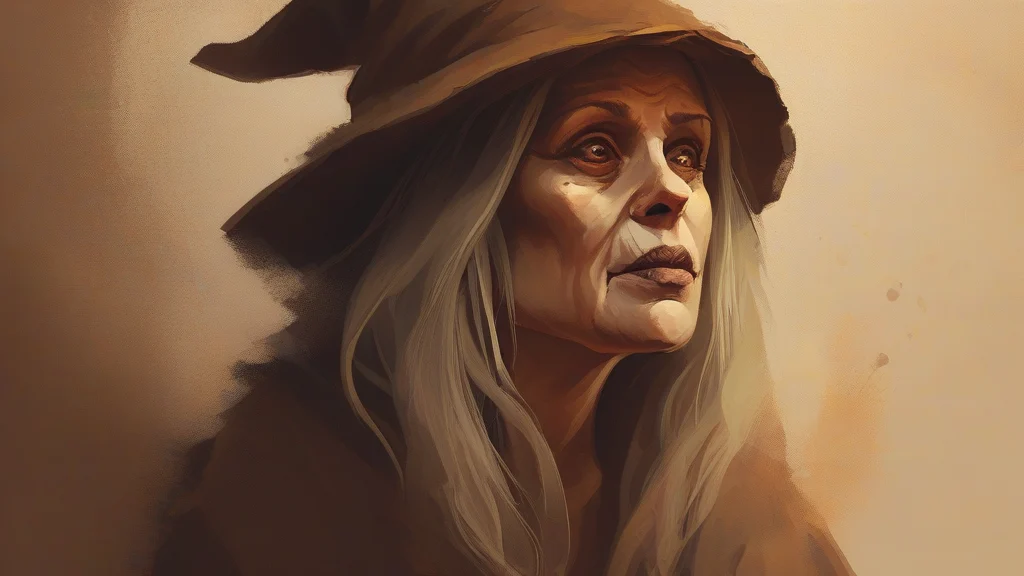
What does hag mean?
The word hag most commonly denotes an old woman in a derogatory way, often implying that she is ugly, disagreeable, frightening, or contemptible. Because of that insulting force, it appears mainly in fictional, deliberately exaggerated, or historical language rather than in neutral reference to an elderly woman. An older and now less common sense of hag means a witch or sorceress, while a separate Scottish and archaic verb meaning “to cut or hack roughly” survives only rarely. The word’s history reaches back to Middle English, when forms of it were used for both an old woman and a witch. Related words include the adjective haggish, meaning characteristically harsh or disagreeable, and haggard, which originally developed from the historical language of witches and sorcery but now describes a worn or exhausted appearance. Although hag can be vivid in narrative and folklore, its modern noun sense is normally considered offensive and is unsuitable as a general term for an older woman.
An old woman, especially one regarded as ugly, contemptible, or disagreeable; formerly also a witch or sorceress.
"The children called the intimidating woman an old hag."
The modern sense is usually derogatory. The sense meaning “witch” is archaic or dialectal.
To cut, hack, or chop roughly.
"They hagged the timber into rough lengths."
This is a chiefly Scottish and archaic verb and is now rare.
The standard plural is “hags.” The word normally retains its derogatory modern meaning.
"The novel portrays the hostile hags who guard the forest."
Once used for a witch, hag survives today chiefly as a derogatory label for an old woman.
Reviewed by Deb Chak, Editor. AI-assisted content curated by RJS Tech Solutions LLP.
Where does hag come from?
The word appears in Middle English with senses including an old woman and a witch, drawing on Old English forms associated with those meanings. The relationship between the older forms remained historically complicated, and the modern dominant sense is chiefly the derogatory term for an unpleasant old woman. From the historical witch sense developed related words such as haggish and haggard, while haggle is also connected with the same broader word family.
Related word forms
How hag is actually used
In its dominant modern sense, hag is usually insulting and should be used only in contexts where derogatory language is intended. Its older sense meaning “witch” is chiefly archaic or dialectal. The verb is rare and regional, occurring especially in Scottish usage.
Easily confused with hag
A hag is an old woman, especially an unattractive or objectionable one, whereas a haggard is a person or thing that looks tired, worn, or prematurely aged.