
What does haggard mean?
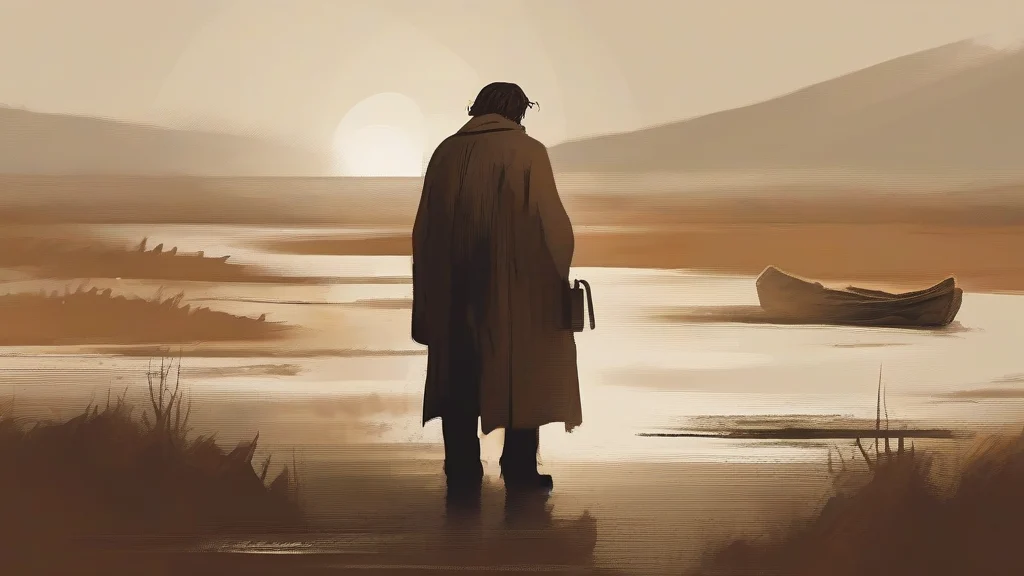
Haggard describes a person, animal, or face that appears extremely thin, gaunt, and worn by exhaustion, illness, hunger, hardship, or age. The word is stronger and more evocative than simply thin, often carrying the implication that strain has visibly affected someone’s health or appearance. Consequently, it is frequently used of tired travelers, worried or distressed people, and those recovering from serious illness. In literary English, a haggard expression can suggest not only physical depletion but also psychological anguish or an unsettling severity. The word is used in both British and American English, although it now sounds more literary than conversational. Haggard also survives as a rare noun for a wild or untrained hawk, preserving the word’s older association with falconry. The form haggardly is occasionally used as an adverb, while haggarded is an uncommon inflected form.
Extremely thin, gaunt, and exhausted-looking, especially as a result of age, illness, hunger, or hardship.
"Her haggard face made her seem much older than she was."
The adjective is more literary and emotionally charged than the ordinary word thin, implying visible strain or deterioration.
A wild or untrained hawk, especially one formerly kept for hunting.
"The falconer kept the wild haggard tethered until it became steady."
This noun sense is now chiefly historical, specialized, or literary.
The plural applies only to the rare noun meaning a wild or untrained hawk.
"The falconer trained several young haggards for the hunt."
Haggard has falconry in its DNA: its Old French ancestor described a wild hawk, while modern English uses it for a gaunt, exhausted face.
Reviewed by Deb Chak, Editor. AI-assisted content curated by RJS Tech Solutions LLP.
Where does haggard come from?
Haggard entered Middle English in the fifteenth century, initially describing someone or something lean, thin, or wasted. It was borrowed through Old French hagard, a falconry term associated with a wild or untrained hawk. The traditional derivation connects the Old French word with Old Norse for “gray” and, more remotely, with a Proto-Indo-European root associated with decay, although the deepest connection is less certain.
Related word forms
How haggard is actually used
In contemporary English, haggard is chiefly literary or formal and conveys more than simple thinness: it commonly suggests exhaustion, deprivation, severe strain, or premature aging. The noun sense is now largely restricted to historical, specialized, or literary contexts.
Easily confused with haggard
Haggle means to bargain over a price or argue over an agreement, whereas haggard is an adjective describing a gaunt, exhausted appearance or, rarely, a noun for a wild hawk.