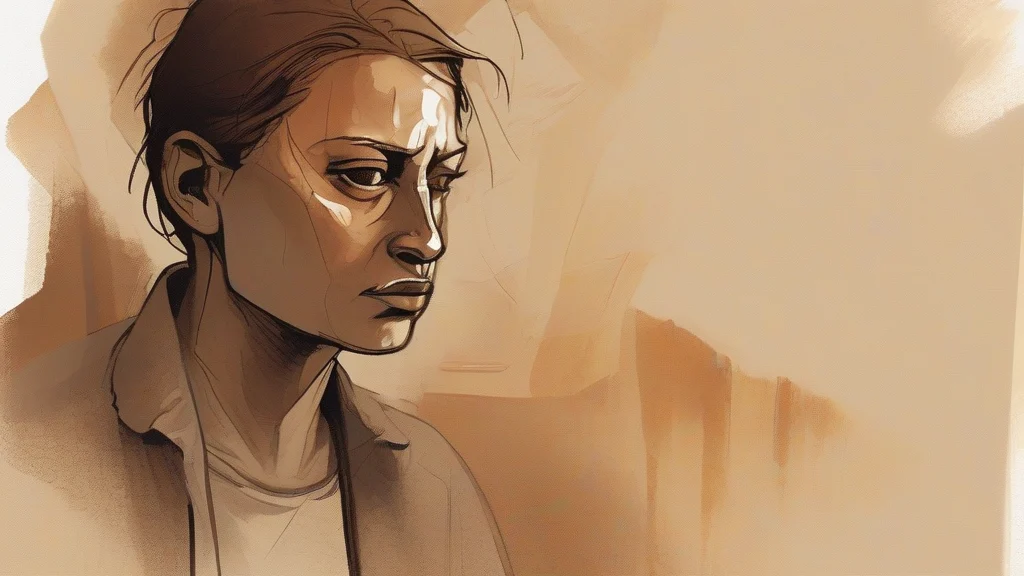
What does drawn mean?
"Drawn" is an adjective describing a face or expression that looks thin, tense, and exhausted — the visible imprint of worry, illness, or sleeplessness. A person who has been through a long ordeal may be described as having a drawn look, with features seemingly pulled tight by strain. The word also applies to curtains or blinds that have been pulled shut: curtains drawn against the light. Underlying both uses is the verb "draw," meaning to pull or drag, so a drawn face is figuratively one that tension has pulled out of shape. The adjective leans literary or formal in tone and usually appears alongside verbs like "look" or "seem." It carries a sympathetic connotation, evoking endurance rather than fault. Related forms include the verb "draw" itself and nouns like "drawing" and "drawer." For writers, "drawn" offers a compact way to convey fatigue and emotional wear on a character's face without naming the cause directly.
(Of a person's face or expression) showing the effects of strain, anxiety, or illness; looking thin, tense, and tired.
"The prisoner's drawn face betrayed months of hardship."
Typically used with "look," "seem," or directly before a noun.
Past participle of "draw": pulled, sketched, selected by lot, or concluded.
"The winning ticket was drawn at midnight."
Standard American and British form; "drew" is the simple past.
When your face is "drawn," it's as if worry has literally pulled it taut — the same verb that gives us drawings gave English a word for exhaustion you can see.
Reviewed by Deb Chak, Editor. AI-assisted content curated by RJS Tech Solutions LLP.
Etymology of drawn
"Drawn" is the past participle of the Old English verb "dragan," meaning to pull or carry, which shares its Germanic roots with words such as "drag" and "draught." Over the centuries the participle hardened into an independent adjective, with the sense of a face pulled taut by strain emerging by at least the early modern period. Cognates survive across the Germanic languages, including Dutch "dragen" (to carry) and German "tragen."
Related word forms
How drawn is actually used
As an adjective describing appearance, "drawn" is somewhat formal or literary and almost always appears attributively before a noun ("a drawn face") or predicatively with verbs of seeming ("she looked drawn"). It carries a sympathetic connotation, suggesting suffering rather than laziness. In everyday speech it most often occurs in the phrase "curtains drawn."
Easily confused with drawn
"Dawn" refers to the first light of morning, while "drawn" describes a tired, strained appearance or something pulled.