
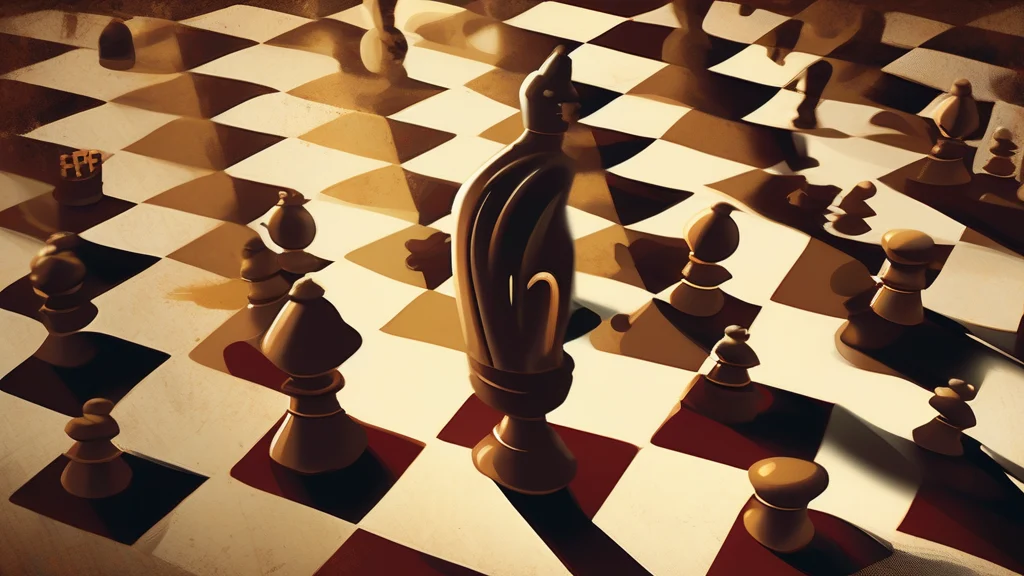
What does pawn mean?
A pawn is first and foremost the smallest chess piece. It begins at the edge of the board, moves forward, and captures diagonally; if it crosses the board safely, it can be promoted to another piece. In ordinary speech, “pawn” also describes a person who is used by another person or group to pursue someone else's aims. This figurative use often suggests deliberate manipulation, although it can be comparatively neutral when someone is merely acting for another party. A third meaning is a possession deposited with a pawnbroker as security against a loan: the object is colloquially called a pawn, and “to pawn” means to leave it temporarily in this way. These senses share an idea of something moved or used for another person's benefit or at another person's risk. The word is especially useful in discussions of strategy and power, where describing someone as a pawn can capture how little independent agency they possess.
A small chess piece that moves forward and captures diagonally; figuratively, a person used to advance another's aims; also, an object deposited as security for a loan.
"The promotion of a pawn provided a decisive advantage in the final phase of the game."
The human sense is often derogatory, while the collateral sense is standard in pawnbroking and related commercial contexts.
To deposit a possession with a pawnbroker as security for a loan, or to use someone as an instrument for advancing another person's objectives.
"She pawned her watch to cover the emergency repair bill."
The plural is used for the chess pieces and for multiple people or possessions serving as pawns.
"The players arranged their pawns across the board before the opening moves."
A chess pawn begins at the edge of the board and can travel only forward, yet it may ultimately reach the far side and become any piece its player chooses.
Reviewed by Deb Chak, Editor. AI-assisted content curated by RJS Tech Solutions LLP.
Where does pawn come from?
The word came into Middle English through Old French paon and Medieval Latin pedo, ultimately referring to the foot or foot soldier. Its chess sense developed from the pawn's original position at the edge of the board, like a foot soldier stationed on the flank. The same Latin root associated with the foot also lies behind words such as pedestrian, pedometer, and pedicure, while related forms include peon.
Related word forms
How pawn is actually used
The figurative sense often carries a disparaging implication that someone is being used or manipulated. In chess, the singular “a pawn” and plural “pawns” are standard. The verb is common in American English and is also used in British English, especially for depositing an object with a pawnbroker.
Easily confused with pawn
A paw is the foot or foot-like part of an animal, whereas a pawn is a chess piece, a subordinate person, or an object left as collateral for a loan.