
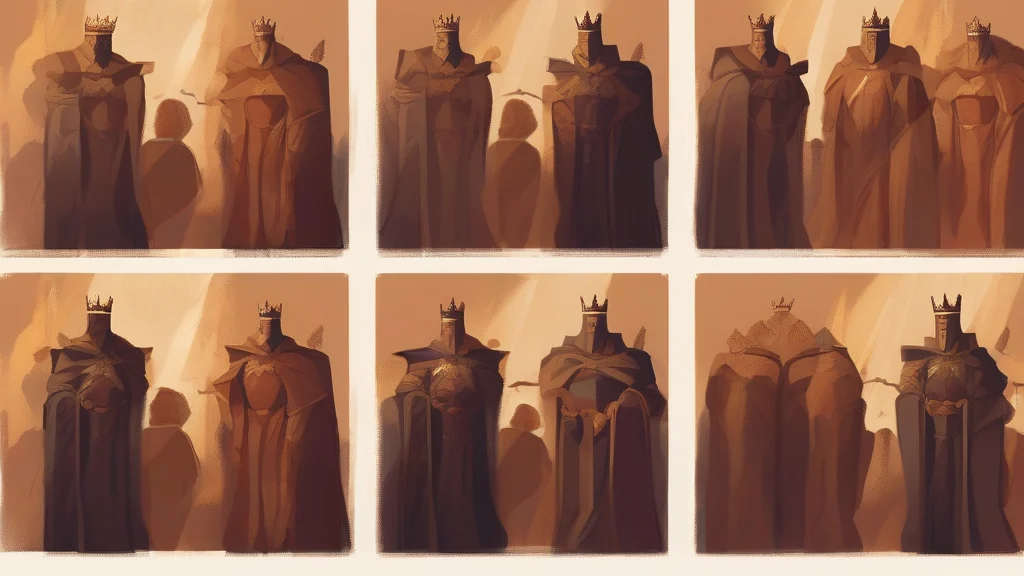
What does crownless mean?
Crownless describes someone or something that lacks a crown. In its literal sense it applies to a monarch who has lost, never received, or chosen not to wear a crown; in its figurative sense it denotes anyone stripped of sovereignty, rank, or the highest honours. The word belongs chiefly to literature — poetry, drama, and historical narrative — where the image of an unadorned head carries strong symbolic weight: exile, abdication, defeat, or humble worth that needs no outward emblem of power. Writers use 'crownless' for pathos and irony alike, whether portraying a dethroned ruler wandering bareheaded or celebrating virtue that triumphs without royal insignia. Because it is built on the transparent pattern of adjective plus '-less', its meaning is instantly graspable, yet its evocative associations give it more force than plain alternatives such as 'uncrowned'. It remains uncommon in ordinary conversation but is a precise and expressive choice when the loss or absence of a crown — real or metaphorical — is exactly what needs saying.
adjectiveLacking a crown; not crowned. Used literally of monarchs or figures without a crown, and figuratively of anything deprived of the honour, authority, or glory a crown symbolises.
- Having no crown; not wearing or possessing a crown.
- Figuratively deprived of sovereign power, dignity, or supreme honour.
"The portrait depicts a crownless king in exile, his head bare after the abolition of the monarchy."
"After the revolution, the crownless former king lived quietly abroad."
"In Milton's imagery, the crownless victor wins glory greater than any coronation could confer."
Shakespeare called Richard II's fall from power 'unkinged' — poets reach for 'crownless' to capture that same image of majesty stripped bare.
Reviewed by Deb Chak, Editor. AI-assisted content curated by RJS Tech Solutions LLP.
Etymology of crownless
Crownless is formed from 'crown' plus the Germanic suffix '-less', which negates possession of whatever precedes it. The noun 'crown' entered English from Old French 'corone' (itself from Latin 'corona', meaning garland or wreath), so the word ultimately traces back to Latin roots shared with 'coronation', 'corolla', and related terms denoting wreaths and encirclement. As a compound of familiar elements, 'crownless' arose naturally within English rather than being borrowed, and has been available to writers since at least the early modern period as a way of describing kingship denied or lost.
How crownless is actually used
Chiefly literary or poetic in register; rare in everyday speech. The figurative sense — stripped of authority or distinction — appears more often than the literal one in modern writing.
Easily confused with crownless
Crowless means lacking crows (the birds), whereas crownless means lacking a crown; the words differ by only one letter but have entirely unrelated meanings.