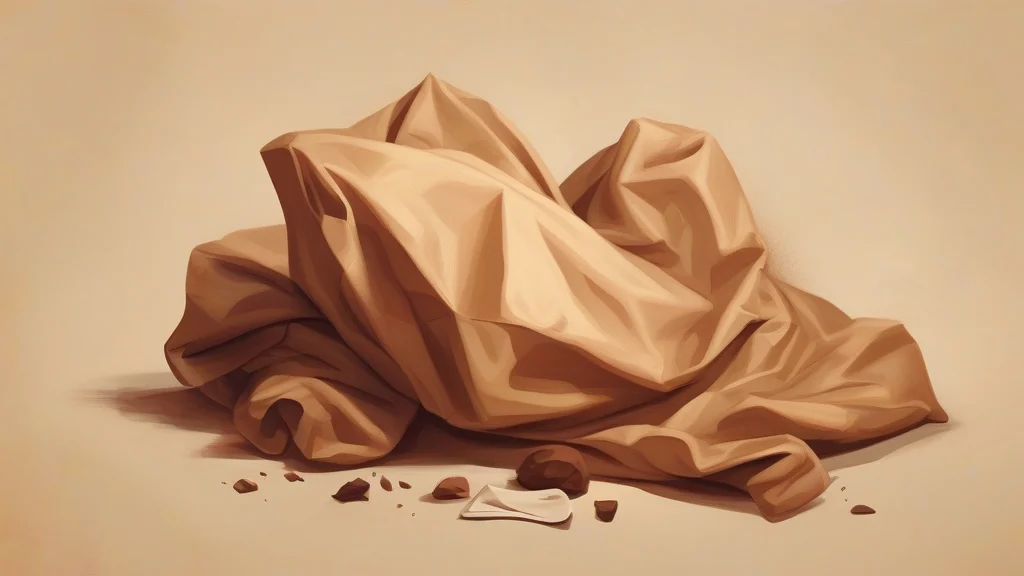
What does crumply mean?
"Crumply" is an adjective used to describe things that are full of wrinkles or creases, or that wrinkle easily when folded, crushed, or worn. It most often applies to soft materials such as paper, clothing, bed linen, and banknotes, but it can also affectionately describe features — a crumply smile or crumply skin around the eyes. The word derives from "crumple," joined with the adjectival suffix "-ly," and its roots reach back to Old English terms for crookedness. Though informal in tone, it is a warm, evocative word: where "wrinkled" can sound critical and "rumpled" slightly disapproving, "crumply" tends to suggest comfort, wear, and character. It appears somewhat more frequently in British usage than in American writing, but it is understood on both sides of the Atlantic. Readers should take care not to confuse it with "crumbly," which describes food or material that breaks into small pieces.
adjectiveTending to become creased or wrinkled easily, or having a soft, crumpled texture or appearance.
- Having many wrinkles or creases, especially of fabric, paper, or skin.
- Prone to wrinkling or creasing when handled or folded.
"She pulled a crumply five-pound note out of her coat pocket."
"He smoothed out the crumply letter before reading it aloud."
"Linen is beautiful but hopelessly crumply after a night in a suitcase."
A crumply banknote has survived pockets and purses alike — and 'crumply' traces back to an Old English word for 'crooked.'
Reviewed by Deb Chak, Editor. AI-assisted content curated by RJS Tech Solutions LLP.
Etymology of crumply
"Crumply" is formed from "crumple," a verb whose origins lie in Middle English, combined with the suffix "-ly" to create an adjective. The root behind "crumple" is generally connected to the Old English word "crump," meaning bent or crooked, which also gave rise to related words such as "crimp" and contributed to "cramp." The adjective emerged as a natural derivative for describing things in a crumpled state, though it remains a relatively informal and less commonly recorded form than its parent verb.
How crumply is actually used
Informal to neutral in register, and more common in British English than American English. It carries a gentle, often affectionate connotation — describing a beloved old shirt or a kindly face rather than suggesting neglect.
Easily confused with crumply
Crumbly describes something that breaks easily into small crumbs, while crumply describes something covered in wrinkles or creases.