What does crutching mean?
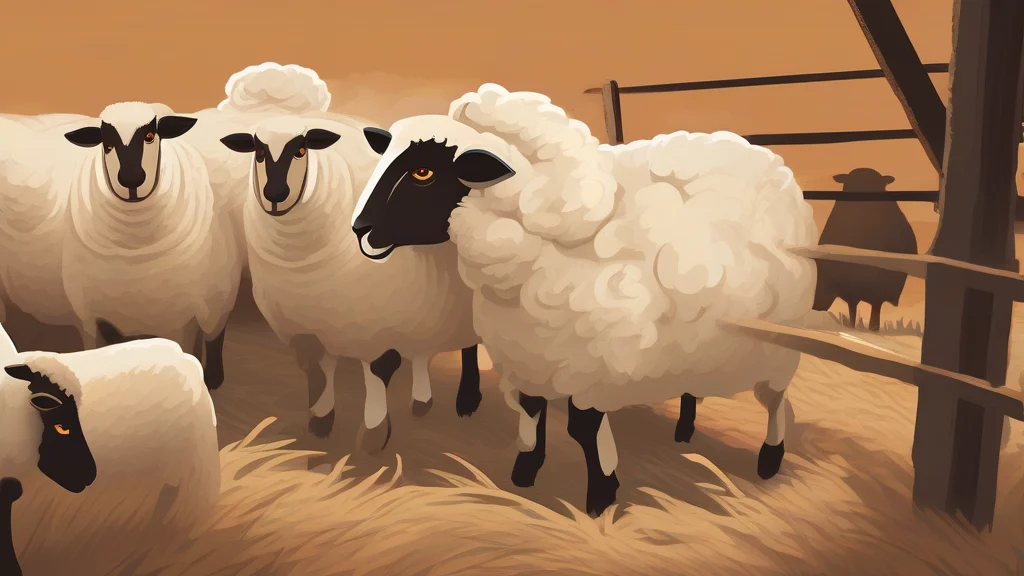
Crutching is a term best known in Australian and New Zealand sheep farming for the routine practice of clipping the wool from around a sheep's tail, hindquarters, and udder. Unlike full shearing, which removes the fleece, crutching is a targeted trim performed mainly to keep animals clean, to prevent flystrike — a painful and potentially fatal condition caused by blowflies laying eggs in soiled wool — and to prepare ewes for lambing. It is typically carried out in a dedicated crutching shed or in shearing sheds during quieter periods, often in the weeks before lambing begins. Outside agriculture, crutching simply describes the act of getting about on crutches after an injury. The word carries a practical, working-rural connotation, familiar to anyone raised around livestock but likely to raise eyebrows among city dwellers who assume it relates to orthopaedic supports. Its dual life makes it a small but vivid example of regional vocabulary shaped by industry.
The sheep-farming operation of shearing wool from a sheep's crutch — the area around the tail, breech, and udder — chiefly to prevent flystrike and to prepare ewes for lambing.
"Crutching was completed across the whole property before the rams went out."
Chiefly Australian and New Zealand agricultural usage.
The action of walking or supporting oneself using crutches.
"He managed three months of crutching before the cast finally came off."
Ordinary verbal use of 'crutch'; not regionally restricted.
In Australia and New Zealand, 'crutching' has nothing to do with broken bones — it's how sheep get their rear-ends trimmed before lambing to ward off blowflies.
Reviewed by Deb Chak, Editor. AI-assisted content curated by RJS Tech Solutions LLP.
Etymology of crutching
The word derives from 'crutch', which traces back through Middle English to the Old English 'crycc', meaning a staff or support, from a Germanic root also reflected in 'crook'. The pastoral sense developed in colonial Australasia, where farmers applied the existing word for a support to the supportive trimming of wool around a sheep's rear — a usage well established by the nineteenth century. Related hook-and-staff words such as 'crook' share the same Germanic lineage.
Related word forms
How crutching is actually used
The sheep-husbandry sense is standard in Australian and New Zealand farming vocabulary and may puzzle readers elsewhere; elsewhere 'crutching' is usually understood only as the -ing form of the verb 'to crutch' (walk on crutches). In farm contexts it denotes a routine husbandry task rather than full shearing.
Easily confused with crutching
Clutching means gripping something tightly, whereas crutching refers either to sheep husbandry (trimming wool around the breech) or to walking with crutches.