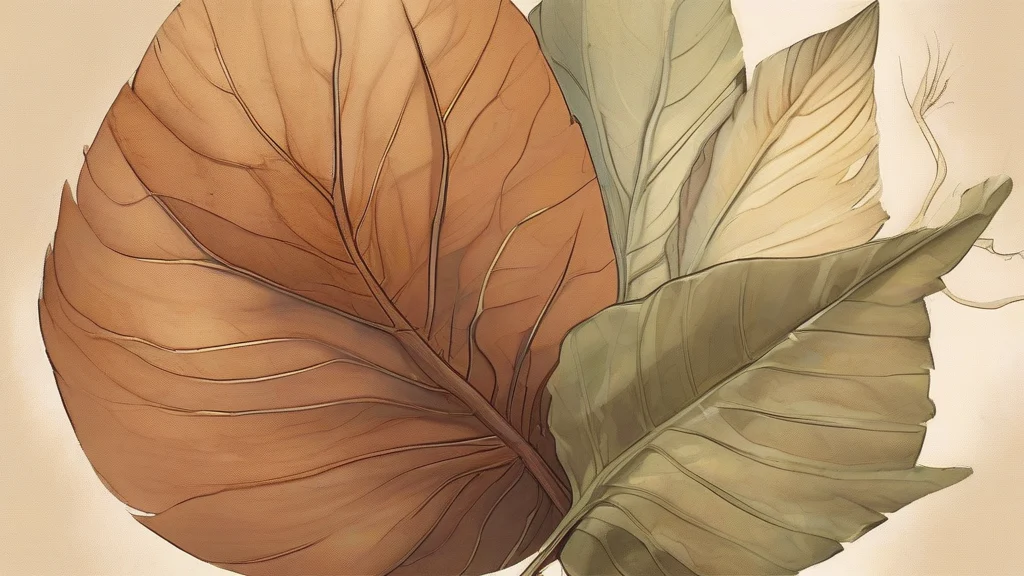
What does cuneate mean?
Cuneate is a technical adjective meaning wedge-shaped: broader at one end and tapering gradually to a narrower point at the other. It appears most often in botany, where it describes leaves, petals, or sepals whose sides slope inward toward the stalk — a 'cuneate base' being one of the standard terms botanists use to characterise leaf form alongside rounded, cordate, and truncate. Zoologists and anatomists apply it similarly to shells, bones, or other structures that taper toward an attached end. The word derives from the Latin cuneus, meaning wedge, which also underlies cuneiform, the ancient Mesopotamian writing system impressed with wedge-shaped marks. Because it belongs chiefly to scientific description, cuneate carries a formal, precise register and would sound out of place in everyday speech. For readers of field guides, floras, and anatomical texts, however, it is a compact and exact way to record a shape that looser words like 'tapered' fail to pin down.
adjectiveWedge-shaped; tapering to a narrow point at the base or attachment. Used chiefly in botany and zoology to describe leaves, petals, shells, or body parts that narrow gradually toward the point of attachment.
- (Botany) Of a leaf, petal, or similar structure: wedge-shaped, with the sides tapering gradually to the point of attachment.
- (Zoology / anatomy) Wedge-shaped; tapering toward the base or attached end.
"The botanist noted that each leaf was distinctly cuneate, narrowing to a slender base where it met the petiole."
"Each leaf was distinctly cuneate, broadest at the apex and narrowing to a slender base."
"The shell's cuneate profile gave it a distinctive wedge-like silhouette."
The same Latin word for 'wedge' gave us both cuneate, describing the tapering bases of leaves, and cuneiform, humanity's oldest writing system — pressed into clay by a stylus shaped like just such a wedge.
Reviewed by Deb Chak, Editor. AI-assisted content curated by RJS Tech Solutions LLP.
Etymology of cuneate
Cuneate comes from the Latin cuneus, meaning 'wedge'. It entered English as a learned term, likely in the seventeenth century, when naturalists were adopting Latin descriptive vocabulary for systematic anatomy and plant morphology. It shares this root with cuneiform, the wedge-shaped script of ancient Mesopotamia, making the two words distant cousins through a single geometric idea.
How cuneate is actually used
A formal technical term confined almost entirely to botanical and zoological description. In botanical usage it typically specifies the shape of the leaf base — the end nearest the stalk — rather than the tip. Rarely encountered outside scientific literature.
Easily confused with cuneate
Cuneiform refers specifically to the ancient wedge-shaped script of Mesopotamia (or anything wedge-shaped in a general sense), while cuneate is a technical term for structures that taper to a wedge shape at their base, used mainly in biology.
Acuminate describes a part that tapers to a long, slender point at its tip, whereas cuneate describes one that is broad at the tip and narrows to a wedge at the base.