
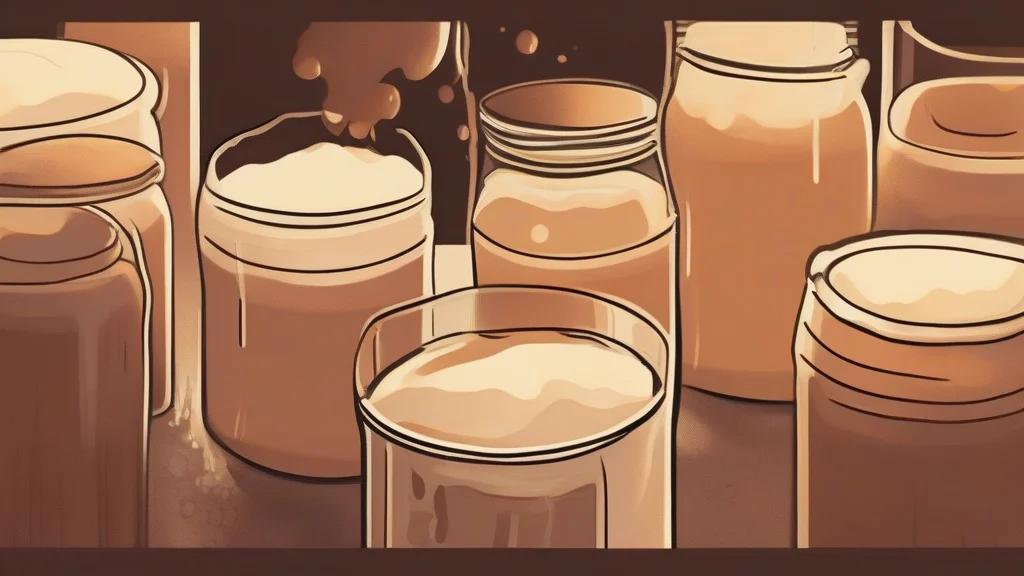
What does curdling mean?
Curdling refers to the process by which a liquid — most commonly milk — separates into soft solids called curds and a thin liquid called whey, usually triggered by heat, acid, bacteria, or enzymes. In everyday cooking, curdling is typically unwanted: a custard breaks, a cream sauce turns grainy, or milk sours on its own. Yet the same process is deliberately induced to make cheese, yogurt, and other cultured dairy products, where controlled coagulation is the essential first step. Beyond the kitchen, 'curdling' carries a powerful figurative meaning: the phrase 'blood-curdling' describes a sound or sight so terrifying that it seems to make one's blood thicken and congeal like spoiled milk, linking dairy chemistry to visceral dread. The word derives from 'curd,' the old term for coagulated milk, with the suffix '-le' suggesting a gradual process. It remains common in both literal culinary usage and vivid descriptive language about fear.
The action or process of a liquid separating into curds and whey; also figuratively, a reaction of intense fear.
"The chef watched helplessly as the hollandaise began its slow curdling."
As a noun, 'curdling' is a gerund describing the ongoing process rather than a discrete object.
To cause or undergo separation into curds and whey, or figuratively to fill with terror.
"Her blood ran cold, curdling at the sight before her."
Often used with 'blood-' as a modifier in the fixed phrase 'blood-curdling.'
When your blood 'curdles,' it isn't just a poetic flourish — the phrase borrows milk's most dramatic failure and turns it into the body's most dramatic fear.
Reviewed by Deb Chak, Editor. AI-assisted content curated by RJS Tech Solutions LLP.
Etymology of curdling
'Curdling' derives from 'curd,' an Old English and Middle English word for the coagulated part of milk, combined with the frequentative suffix '-le' (via Middle English 'crudelen'), which suggests repeated or gradual action. The verb 'curdle' emerged in English around the early 17th century, and 'curdling' followed as its gerund form. The root is related to 'crud,' reflecting ancient Germanic terms for coagulated matter. Cognate ideas appear across Germanic languages, all tied to the transformation of liquid milk into solid form.
Related word forms
How curdling is actually used
In cooking contexts, 'curdling' often signals a mistake (as with sauces or custards), but in cheese-making it is deliberate. The figurative use is almost always tied to fear and frequently appears in the fixed expression 'blood-curdling.'
Easily confused with curdling
Curdling is the clumping or separation of a liquid into curds and whey; coddling means treating someone with excessive indulgence or gently cooking an egg.
Coagulating is the broader scientific term for any liquid turning to a semi-solid mass, while curdling specifically denotes the separation of milk into solid curds and liquid whey.