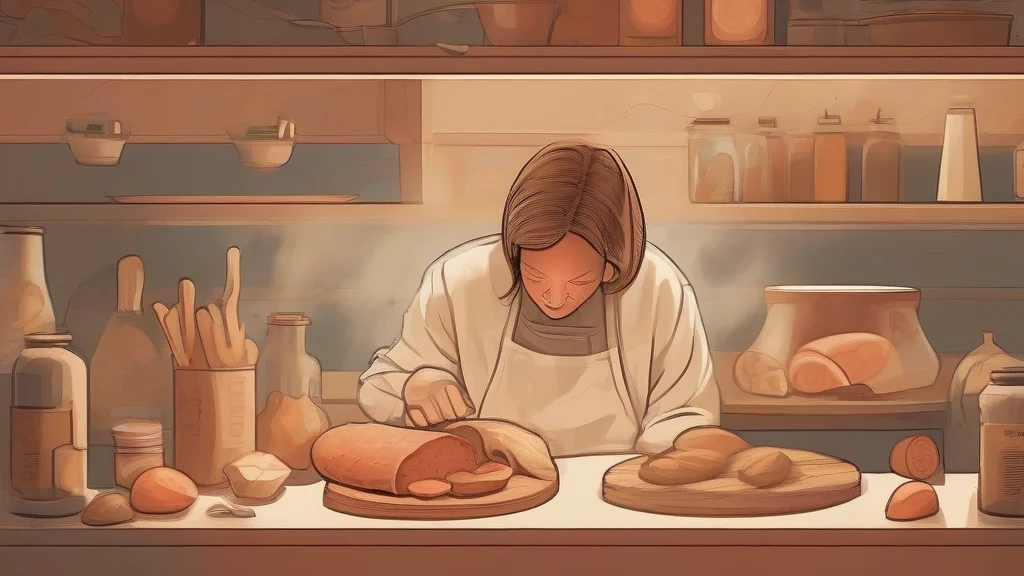
What does cured mean?
Cured functions primarily as the past participle of the verb 'cure', describing something that has been made healthy, whole, or durable. Its most prominent sense concerns medicine: an illness or patient that has been cured has been fully restored to health, as in 'the treatment cured the infection.' The word carries an equally important second life in food preparation, where cured describes meats, fish, and other perishables preserved through salt, smoke, drying, or brine — think prosciutto, smoked salmon, or corned beef. A third, more technical sense applies to materials such as epoxy resin, concrete, and rubber, which are said to be cured once they have hardened through chemical setting. Across these uses, the underlying idea is transformation: taking something vulnerable or unstable and rendering it sound, lasting, and safe. Derived ultimately from the Latin 'cura,' meaning care, the word reminds us that healing, preserving, and hardening all begin as acts of careful attention.
Past tense and past participle of 'cure': to heal a person or eliminate a disease, or to preserve food by salting, drying, smoking, or similar methods.
"She cured the fish herself using nothing more than sea salt and sugar."
Most frequently used in the passive sense ('was cured') in medical writing.
Describing something that has been healed, preserved, or hardened through a curing process.
"The recipe calls for two cups of diced cured pork."
The same word that describes a patient walking free of disease also describes the ham on your pizza — because both are about making something safe and sound.
Reviewed by Deb Chak, Editor. AI-assisted content curated by RJS Tech Solutions LLP.
Etymology of cured
Cured derives from the Latin noun 'cura,' meaning care, concern, or attention. Old French carried this into Middle English as 'cure,' which came to denote both the act of caring for the sick and the successful restoration of health. Over time the word broadened to cover the preservation of food and the hardening of materials — different applications unified by the idea of careful treatment producing a sound result. Related English words sharing the Latin root include 'curator,' originally one entrusted with care, and 'curative,' meaning able to heal.
Related word forms
How cured is actually used
In medical contexts, 'cured' carries a strong, definitive connotation — doctors often prefer cautious terms like 'in remission' when a return is possible, reserving 'cured' for conditions genuinely eliminated. In food contexts, 'uncured' products are common on labels, but note that US labeling rules mean 'uncured' meats may still be preserved using natural sources like celery powder.
Easily confused with cured
'Cured' means healed or preserved, while 'curved' means bent into a rounded shape.
'Cued' means signaled or prompted, whereas 'cured' means healed or preserved.