
What does preserved mean?
Preserved means kept in an original, existing, or valued condition through care and protection. People preserve old buildings, artworks, documents, traditions, landscapes, and natural specimens so that they remain available for later generations. The word can also describe food that has been treated to prevent spoilage, such as fruit preserved in syrup or vegetables preserved in vinegar. In social and cultural contexts, preserving often implies that something is valued and deliberately protected from disappearance or unwanted change. The word is especially useful when describing the successful defence of something against time, decay, neglect, or destruction. It is not merely a formal alternative to keeping or protecting: it carries the stronger implication of maintaining something’s identity, condition, or continuity.
verbTo keep something in its original or existing state, especially by protecting it from damage, decay, or destruction. It can also mean to maintain something valued, such as a tradition, a building, or a quality.
- Kept in an original or existing state, especially through protection from damage or decay.
- Maintained or continued, as a tradition, institution, quality, or way of life.
- Kept alive or unchanged for a particular purpose, as in a specimen or food product.
"The old bridge has been carefully preserved for future generations."
"The museum preserved the manuscript in carefully controlled conditions."
"Her photographs preserve the atmosphere of the vanished neighbourhood."
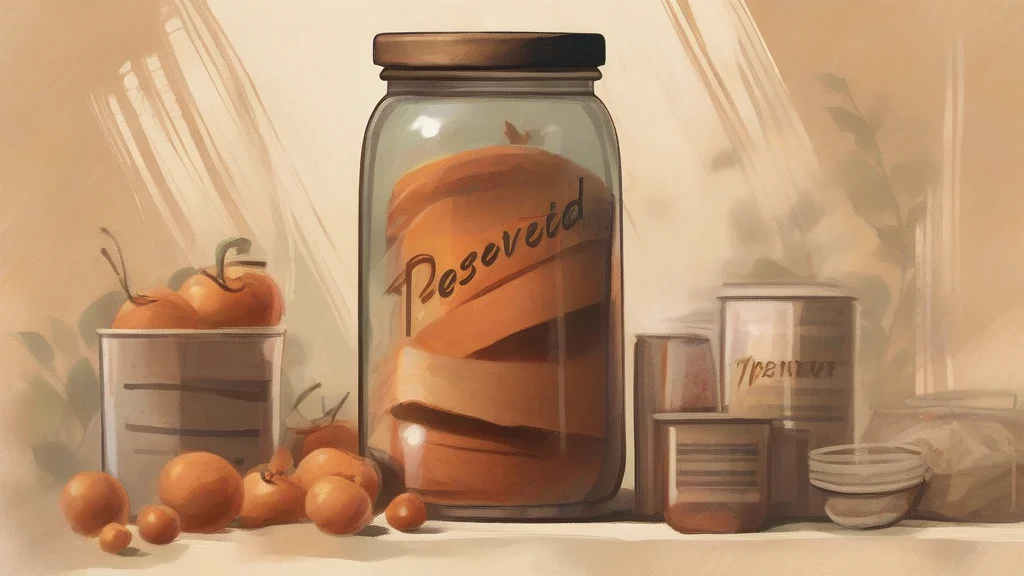
"Fruit preserved in syrup is stored in glass jars."
A preserved object is not merely old: it has successfully resisted time, decay, and careless change.
Reviewed by Deb Chak, Editor. AI-assisted content curated by RJS Tech Solutions LLP.
Where does preserved come from?
The word derives through Middle English and Old French from Latin praeservare, formed from prae- meaning “before” and servare, meaning “to keep” or “save.” The same Latin root is reflected in related English words such as preserve, preservation, preservative, conserve, and conservation. The development from the idea of keeping something safe to the modern meanings of maintaining a tradition or protecting an object follows the word’s long history of describing care and preservation.
Related word forms
How preserved is actually used
The word is common in formal and descriptive contexts, especially in discussions of heritage, conservation, food, and natural specimens. It can suggest active protection and care, not merely accidental survival.
Easily confused with preserved
Preserved means kept in an existing or original condition, whereas reserved means set aside for a particular purpose or claimed in advance.