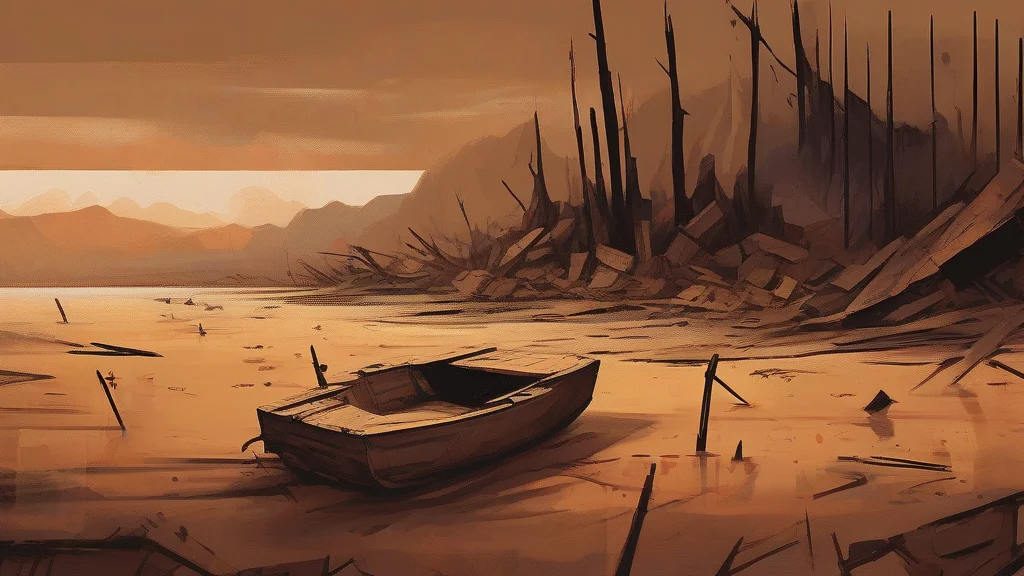
What does destroyed mean?
"Destroyed" is the past tense and past participle of the verb "destroy," meaning to damage something so completely that it ceases to exist or can never be restored to its former state. A fire may destroy a house, war may destroy a city, and time may destroy a document. The word carries strong connotations of finality — unlike words such as "damaged" or "hurt," which imply something remains, "destroyed" signals total loss. It is also widely used figuratively to describe emotional devastation ("she was destroyed by the betrayal") and, informally, to describe decisive defeat in competition. As an adjective, it characterizes people or things reduced to ruin. The word derives from Latin "destruere," meaning to unbuild or tear down, formed from "de-" (down) and "struere" (to build), making its literal sense remarkably transparent: to undo what was built. This makes it one of English's most vivid and frequently used verbs of loss.
Having put an end to the existence of something by damaging or attacking it so thoroughly that repair or recovery is impossible.
"The invaders destroyed the temple centuries ago."
Functions as both the simple past and past participle of "destroy."
Describing someone or something that has been reduced to a state of devastation, ruin, or overwhelming distress.
"She returned home looking completely destroyed after the funeral."
Often intensified with adverbs like "utterly," "completely," or "emotionally."
When a building is destroyed, it's not just broken — it's gone forever, which is why insurance policies fight over this single word.
Reviewed by Deb Chak, Editor. AI-assisted content curated by RJS Tech Solutions LLP.
Etymology of destroyed
"Destroyed" comes from the verb "destroy," which entered Middle English from Old French "destruire," itself derived from Latin "destruerе," a compound of "de-" (down, away) and "struere" (to build, pile up). The original sense was literally to unbuild or tear down what had been constructed. The same Latin root "struere" gave English a family of related words including "structure," "construct," and "destructive." The word has carried its sense of complete ruin since its earliest use in English.
Related word forms
How destroyed is actually used
"Destroyed" is common in both formal and informal registers. In informal speech, it can be used hyperbolically to mean badly defeated or exhausted, as in sports commentary ("they were destroyed in the second half"). As an adjective describing emotional states, it is more emotive and dramatic than alternatives like "upset."
Easily confused with destroyed
"Distroyed" is simply a misspelling; the correct form is always spelled with an "s": destroyed.