
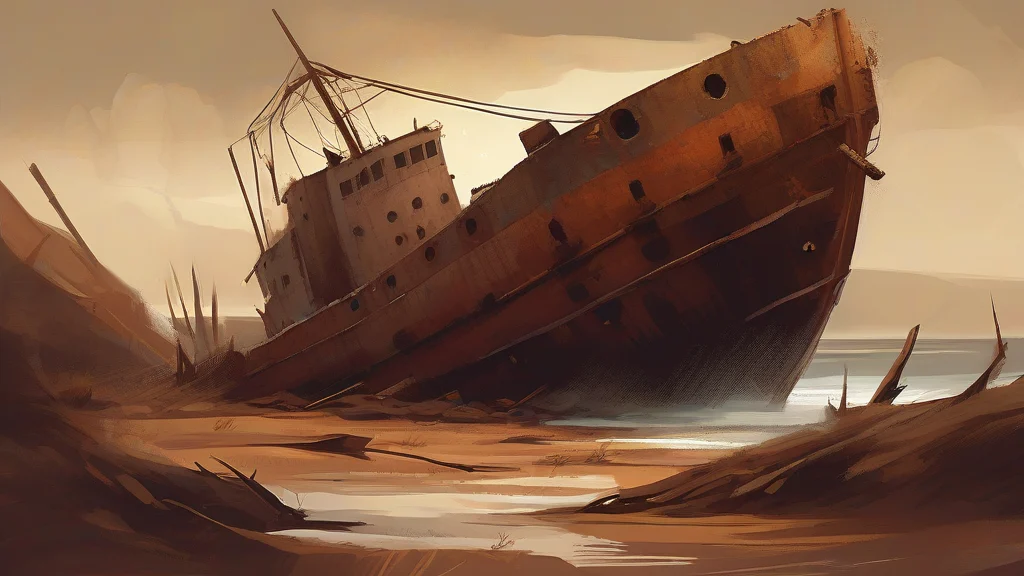
What does wrecked mean?
Wrecked means destroyed, badly damaged, or ruined, and it is the past tense and past participle of “wreck.” The word is often applied to vehicles, buildings, ships, and other things that have been badly damaged, but it also has figurative uses: a plan, relationship, or opportunity can be wrecked, and a person can be wrecked by exhaustion, illness, or emotional strain. In informal British and American English, “wrecked” can mean extremely exhausted or very drunk. Its strong associations with damage and ruin make it more emphatic than simply “damaged” or “spoiled.” Although the word sounds destructive, its historical connection is specifically maritime: “wreck” developed from an Old Norse word associated with shipwreck and wreckage. The modern form therefore carries both a vivid sense of physical destruction and a broad figurative sense of ruin.
Destroyed, badly damaged, or ruined; also used figuratively of spoiled plans, arrangements, or opportunities.
"They found the office wrecked after the break-in."
In informal usage, “wrecked” can also mean extremely exhausted or very drunk.
The past tense and past participle of “wreck,” meaning to destroy, severely damage, or ruin.
"The hurricane wrecked the fishing fleet."
This is the regular inflected form of the verb “wreck,” not a separate lexical entry.
Wrecked began with ships: its original core was the destruction or wreckage of a vessel at sea.
Reviewed by Deb Chak, Editor. AI-assisted content curated by RJS Tech Solutions LLP.
Where does wrecked come from?
Wrecked is formed from “wreck,” using the regular English past-tense and past-participle ending -ed. “Wreck” entered Middle English from Old Norse rek, a word associated with wreckage and the remains of a destroyed ship; related forms include English “wrecker” and “wreckage.” The word later extended beyond maritime contexts to describe severe damage, ruin, and figurative devastation. Its Germanic relatives include forms such as Dutch wrak and German Wrack.
How wrecked is actually used
The word is common in both formal and informal English. With objects, it suggests severe damage or destruction; with plans and arrangements, it suggests ruin or frustration. The meanings “exhausted” and “very drunk” are especially associated with informal speech.
Easily confused with wrecked
Wrecked means damaged, destroyed, or ruined, whereas wreaked means inflicted, as in “wreak havoc.”