What does cusk mean?
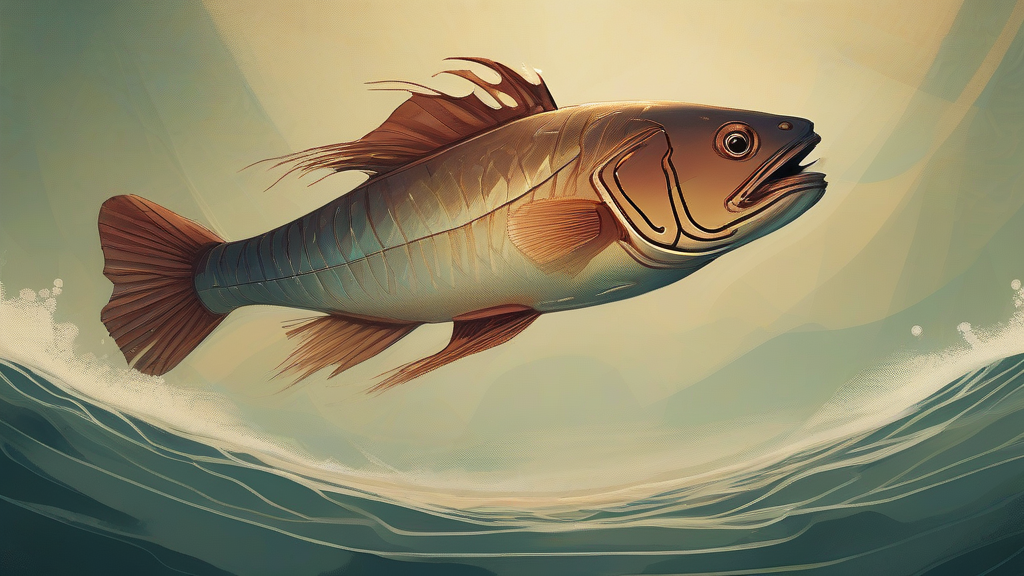
Cusk is a large, slow-growing marine fish of the cod family, known scientifically as Brosme brosme. It inhabits cold, rocky bottoms of the North Atlantic on both sides of the ocean, from New England and Atlantic Canada to Iceland, Greenland, Norway, and the British Isles. With its single long dorsal fin, broad head, and uniform brownish-gray coloring, it is less familiar to shoppers than cod or haddock, yet it has long been caught commercially and prized for its firm, white flesh, which holds up well in chowders, stews, and baked dishes. The name varies widely by region: Americans say cusk, Scandinavians call it torsk, and Britons know it as tusk. Because of these overlapping names, cusk is easily confused with unrelated words such as cusp or with animal tusks, but among fishermen and cooks along the North Atlantic coast it remains a respected, if understated, staple of the day's catch.
nounA large, long-bodied marine food fish (Brosme brosme) of the cod family, found in rocky depths of the North Atlantic and valued as table fare; also called tusk or torsk.
- The marine fish Brosme brosme of the cod family, found on rocky bottoms of the North Atlantic and caught commercially for food.
"The trawler returned to Gloucester loaded with cusk, haddock, and a few halibut."
"Fishermen hauling lines off Maine often find cusk alongside cod and pollock."
"The chowder called for firm white-fleshed fish, so she substituted cusk for haddock."
The plural follows the regular English pattern; as a food fish it is often treated as an uncountable mass noun ('some cusk') when referring to the meat rather than individual animals.
"The deckhands sorted the morning's catch into cod, cusks, and pollock."
The cusk goes by so many aliases — torsk in Scandinavia, tusk in Britain — that it's practically swimming under assumed identities.
Reviewed by Deb Chak, Editor. AI-assisted content curated by RJS Tech Solutions LLP.
Etymology of cusk
The word cusk entered English in the late seventeenth century, borrowed from Scandinavian sources — compare Norwegian and Danish forms of the word for this fish, which survives today as torsk in related usage. It belongs to the vocabulary of North Atlantic fishermen who traded names freely across languages, which explains why English speakers ended up with both cusk and tusk for the same species. Beyond its Scandinavian roots, no deeper Indo-European ancestry can be stated with confidence.
How cusk is actually used
Cusk is chiefly a commercial and regional term used by fishermen, fishmongers, and seafood markets in New England and Atlantic Canada; it rarely appears outside contexts involving fishing or cooking.
Easily confused with cusk
A cusp is a point or tip (such as on a tooth or at a turning point), whereas cusk is a North Atlantic food fish of the cod family.
A tusk is a long protruding tooth, as on an elephant or walrus; cusk names an edible fish — though in British waters the same fish is confusingly called 'tusk'.