
What does tusk mean?
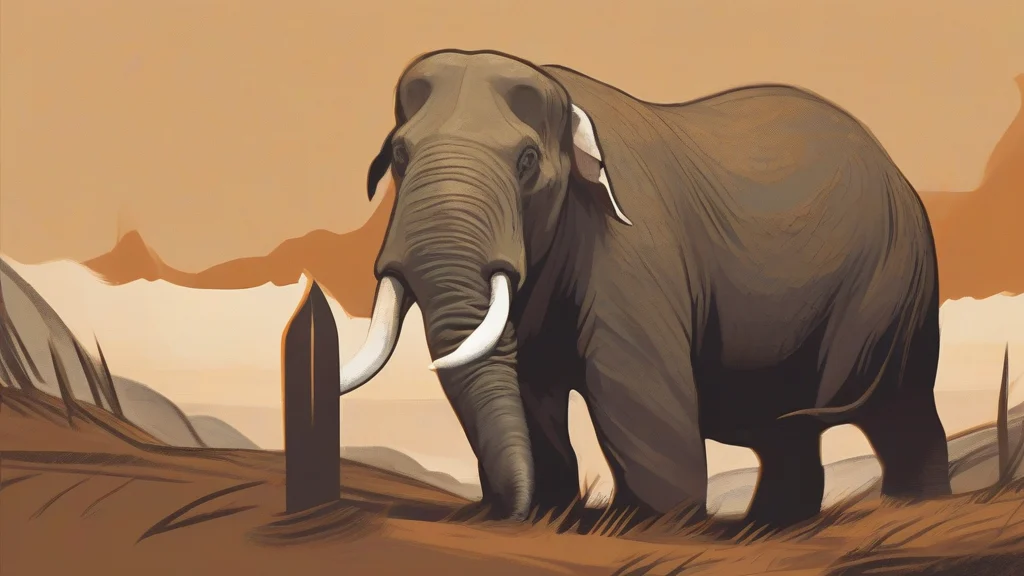
A tusk is a long, projecting tooth, especially the paired teeth of elephants, walruses, boars, and some other animals. The word is most commonly associated with elephants, whose tusks are enlarged incisors that can be used to dig, strip bark, handle objects, defend the animal, and signal its age or social status. Walrus tusks are also familiar, while boars have shorter curved tusks. In ordinary speech, “tusk” is more specific than “tooth”: it suggests a tooth that is unusually large, elongated, or protrudes prominently. The term can also describe a conspicuous canine tooth in a person, although that usage is informal. “Tusk” is normally used as a countable noun, and its standard plural is “tusks.”
nounA tusk is a long, protruding tooth, especially one of the paired teeth of elephants, walruses, or other animals. In some contexts, the word also refers to the tooth of a boar or a prominent canine tooth in a person.
- A long, protruding tooth, especially one of the paired teeth of an elephant, walrus, boar, or similar animal.
- A prominent canine tooth in a person, especially when described as unusually large or conspicuous.
"The elephant used its tusks to strip bark from a tree."
"The old bull elephant had enormous, broken tusks."
"His awkward smile revealed a slightly crooked tusk."
The standard plural of tusk is tusks.
"The museum displays a pair of elephant tusks."
An elephant's tusks are enlarged incisors, not ordinary chewing teeth: they can dig for water, strip bark, move objects, and help the animal defend itself or compete with rivals.
Reviewed by Deb Chak, Editor. AI-assisted content curated by RJS Tech Solutions LLP.
Where does tusk come from?
The word descends from Old English tusc, meaning a tooth or tusk, and appears in Middle English as tuske. It is related to Old Norse tuskr and to forms in other Germanic languages. The modern sense continues the older English meanings of a tooth and, more specifically, a projecting tooth.
Related word forms
How tusk is actually used
The word is neutral and is used in both formal and informal contexts. It is especially associated with elephants and walruses; in descriptions of people, it is usually informal and often suggests an unusual or prominent canine tooth.
Easily confused with tusk
A tooth is a general term for any of the hard structures in the mouth, while a tusk is specifically a long or prominent tooth projecting from the mouth.
A fang is a sharp, pointed tooth, especially one associated with venomous or predatory animals, whereas a tusk is typically a large, elongated tooth used for digging, display, or defense.