What does cutglass mean?
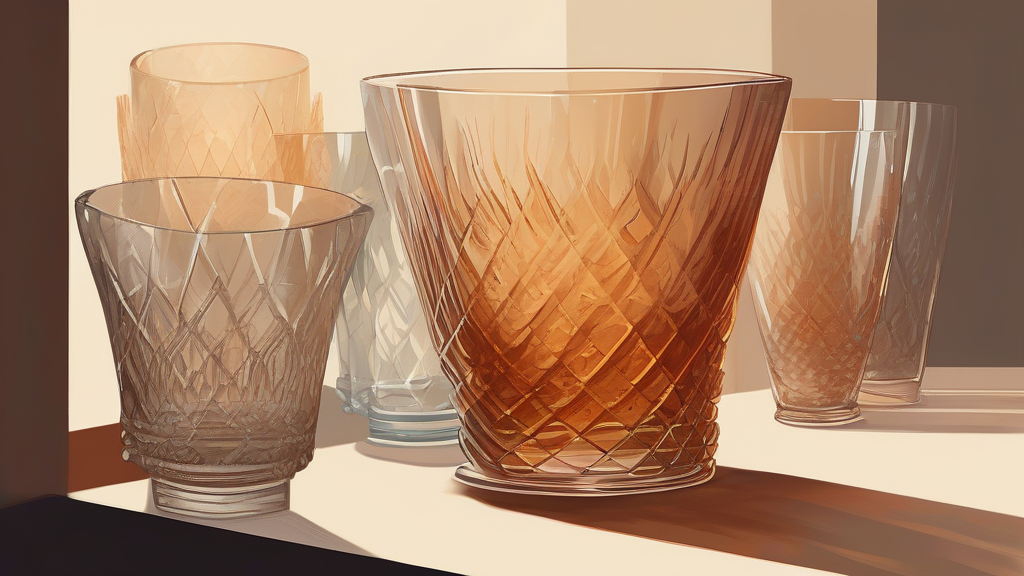
'Cutglass' describes glassware whose surface has been shaped into facets, grooves, and patterns by grinding wheels, a decorative technique that reached particular popularity in Britain, Ireland, and America from the late eighteenth century onward. A cutglass bowl or decanter catches and refracts light in a way plain glass cannot, which is why such pieces have long been associated with formal dining rooms and inherited wealth. Beyond the literal sense, the adjective has developed a well-known figurative use, especially in British English: a 'cutglass accent' denotes the clipped, precisely articulated speech traditionally associated with the upper classes and elite schooling. The metaphor works because such speech sounds polished, sharp-edged, and expensive, much like the object itself. The word is typically written hyphenated ('cut-glass') in edited prose, though the solid form appears in informal contexts. Whether literal or figurative, the term carries connotations of refinement, craftsmanship, and old money, making it a vivid shorthand for elegance in both description and dialogue.
Glass that has been decorated by cutting patterns or facets into its surface; glassware made in this way.
"The auction house catalogued a fine collection of Victorian cut glass."
As a noun it usually functions as a collective or material noun ('cut glass') rather than taking a regular plural; individual pieces are counted separately.
Made of, or relating to, glass decorated with cut facets or patterns; figuratively (chiefly British), describing an upper-class accent of precise, clipped articulation.
"A cutglass vase stood centred on the mahogany table."
As a material noun, 'cut glass' is normally uncountable. When counting individual items, the plural applies to the container word (e.g. 'cut-glass tumblers', 'three pieces of cut glass').
"The cupboard held six cut-glass tumblers and a matching decanter."
'Cutglass' does double duty: it describes sparkling faceted ware — and, in Britain, that famously posh accent said to be so refined it could 'shatter'.
Reviewed by Deb Chak, Editor. AI-assisted content curated by RJS Tech Solutions LLP.
Etymology of cutglass
The term combines 'cut', referring to the wheel-cutting technique used to decorate glass since antiquity and industrialised for tableware in the eighteenth century, with 'glass', a word of Germanic origin (Proto-Germanic *glasam) originally connected with the shining or glossy quality of the material. English cognates sharing this ancient root of brightness include 'glaze', 'gleam', and 'glitter'. The figurative application to accents arose in twentieth-century Britain, playing on the idea of polished, sharply defined speech.
How cutglass is actually used
In careful modern usage the term is normally hyphenated ('cut-glass'), whether literal or figurative. The figurative sense is chiefly British and carries connotations of privilege and formality, sometimes affectionate and sometimes gently mocking. In American English the word is almost exclusively literal.
Easily confused with cutglass
Lead crystal is glass containing lead oxide that gives brilliance and weight, whereas 'cut glass' refers to any glass decorated by cutting and may or may not be lead crystal.