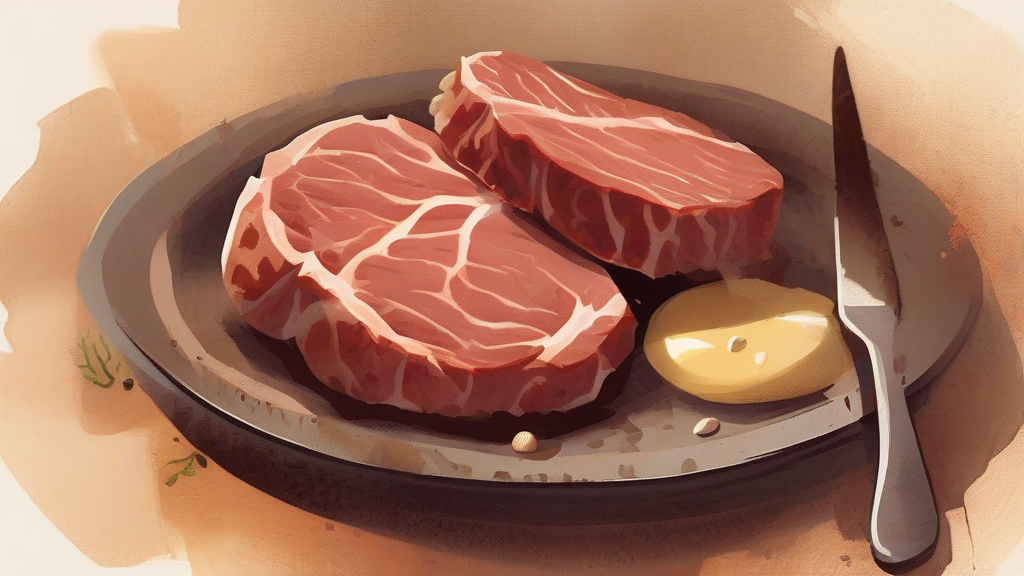
What does cutlet mean?
A cutlet is a portion of prepared meat, most classically a thin slice taken from the rib, loin, or leg of animals such as lamb, veal, pork, or chicken. In Western cooking, cutlets are frequently coated in breadcrumbs or batter and then fried or grilled, yielding crisp, quick-cooking dishes like Wiener schnitzel's cousin, the breaded veal cutlet. The word also enjoys a second life far from its French origins: across South Asia and Japan, a 'cutlet' means a flattened patty of seasoned minced meat, fish, or vegetables, crumbed and shallow-fried as a snack or side dish. The term derives from the French côtelette, literally 'little rib', reflecting the cut's anatomical source. Whether encountered on a bistro menu or at a Kolkata street stall, the word signals something savoury, hand-sized, and satisfyingly fried.
nounA cutlet is a thin slice of meat, typically taken from the leg or rib of lamb, veal, pork, or chicken, often cooked by frying or grilling. In South Asian and other cuisines, it also denotes a flattened, seasoned minced-meat or vegetable patty coated in breadcrumbs and shallow-fried.
- A thin slice of meat cut from the leg, loin, or rib of an animal such as lamb, veal, pork, or poultry, usually bone-in or lightly boned and cooked by frying, grilling, or baking.
- In South Asian, Japanese (as katsu/katsuretsu), and related cuisines, a flat patty of minced meat, fish, or vegetables, coated in breadcrumbs and shallow-fried.
"She ordered breaded veal cutlets with lemon and capers."
"The chef dredged the veal cutlet in flour, egg, and breadcrumbs before pan-frying it golden."
"At the street stall we shared hot potato cutlets served with tamarind chutney."
Standard English plural; used when referring to multiple pieces, e.g. on menus or recipes.
"The recipe serves four using six pork cutlets."
The word 'cutlet' literally descends from the French for 'little rib' — côtelette — so every lamb cutlet on your plate is, etymologically speaking, a tiny rib.
Reviewed by Deb Chak, Editor. AI-assisted content curated by RJS Tech Solutions LLP.
Etymology of cutlet
The word cutlet entered English in the early eighteenth century, borrowed from French côtelette, a diminutive of côte ('rib'), itself derived from Latin costa ('rib' or 'side'). The original meaning referred to a small cut of meat taken from the ribs. Related forms appear across European languages, including Spanish costeleta and Italian cotoletta, all pointing to the same Latin root. Over time, especially through colonial-era culinary exchange in India and later adaptation in Japan (where it inspired dishes like tonkatsu), the word broadened to encompass breaded patties of minced meat and vegetables well beyond its rib-based origin.
How cutlet is actually used
In British and American usage, a cutlet typically refers to a specific butcher's cut (often rib- or leg-derived) and may carry a small bone. In Indian, Sri Lankan, Bengali, and Japanese cuisine, the term has evolved to mean a breaded, fried patty of minced meat, fish, or vegetables, which can surprise diners expecting a whole slice of meat. The word carries a generally appetizing, home-cooked or classic-bistro connotation.
Easily confused with cutlet
A cutlet is a slice or patty of meat, while a cuttlefish is a marine mollusc related to squid and octopus — the similar spelling is coincidental.
A cutting is an uncooked piece trimmed from meat, or a plant stem propagated in soil, whereas a cutlet specifically refers to a prepared portion of meat ready for cooking.