What does cutwater mean?
A cutwater is the sharply angled, wedge-shaped face built onto the upstream end of a bridge pier, shaped like the prow of a boat so that it parts the flowing water instead of taking its full force. By deflecting the current around the pier, it reduces scour and pressure on the foundations, and it often carries ice-breaking duty on northern rivers, which is why many historic stone bridges feature prominently projecting cutwaters at water level. The word also has a nautical sense, referring to the forward part of a ship's stem where the hull first meets the water. Largely a technical term encountered in engineering, architectural history, and maritime writing, cutwater rewards anyone who studies older bridges closely: those pointed stone noses are not decorative but functional, embodying centuries of accumulated knowledge about how structures endure moving water.
nounThe wedged-shaped forward edge of a bridge pier, designed to divide and withstand the flow of water; in nautical use, the corresponding forward part of a ship's stem where it cuts the water.
- The pointed, wedge-shaped end of a bridge pier that faces upstream to divide the current.
- In nautical terminology, the forward part of a vessel's stem where it enters the water.
"Ice floes battered harmlessly against the cutwater of the old stone bridge."
"Debris and driftwood piled against the cutwater after the spring flood."
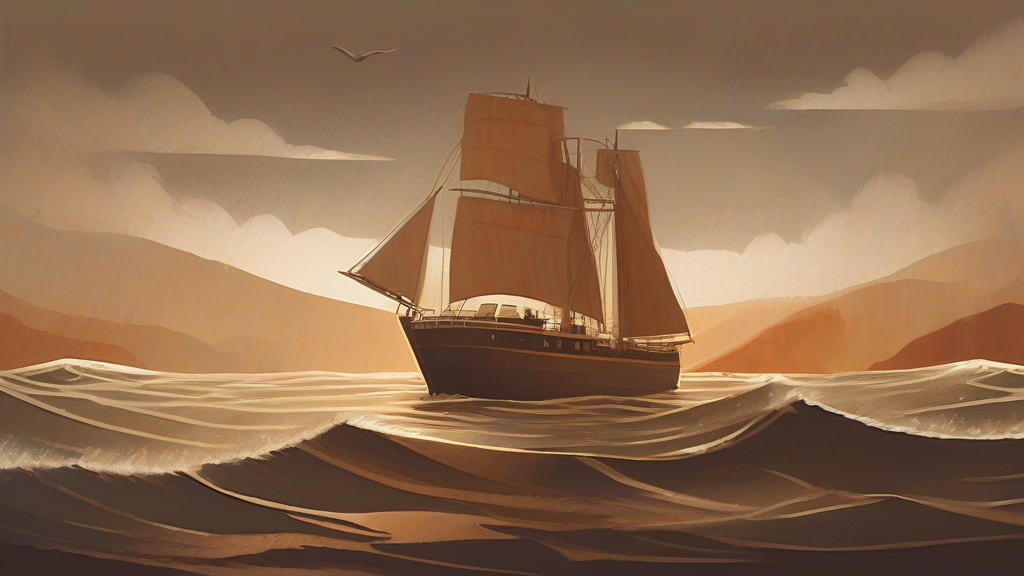
"The ship's cutwater sliced cleanly through the swell as she made headway."
A bridge typically has multiple piers, so the plural refers naturally to several such structures.
"The flood left debris tangled around every one of the bridge's cutwaters."
The next time you cross an old stone bridge, look for the pointed stone nose jutting into the river below — that's a cutwater, quietly splitting the current so the whole structure survives.
Reviewed by Deb Chak, Editor. AI-assisted content curated by RJS Tech Solutions LLP.
Etymology of cutwater
The word is formed transparently within English from the verb 'cut' combined with 'water', describing something that cuts through water. It arose as a descriptive compound for the water-splitting form of bridge piers and ship stems, with recorded usage dating from around the early seventeenth century onward. As a native English compound, it has no foreign cognates, though it shares its building blocks with other water-related compounds such as 'waterline' and 'waterway'.
How cutwater is actually used
A technical term used mainly in civil engineering, architecture, and maritime contexts rather than everyday speech.
Easily confused with cutwater
A cutler is a person who makes or sells knives and cutting implements, whereas a cutwater is the wedge-shaped front of a bridge pier or ship's stem.