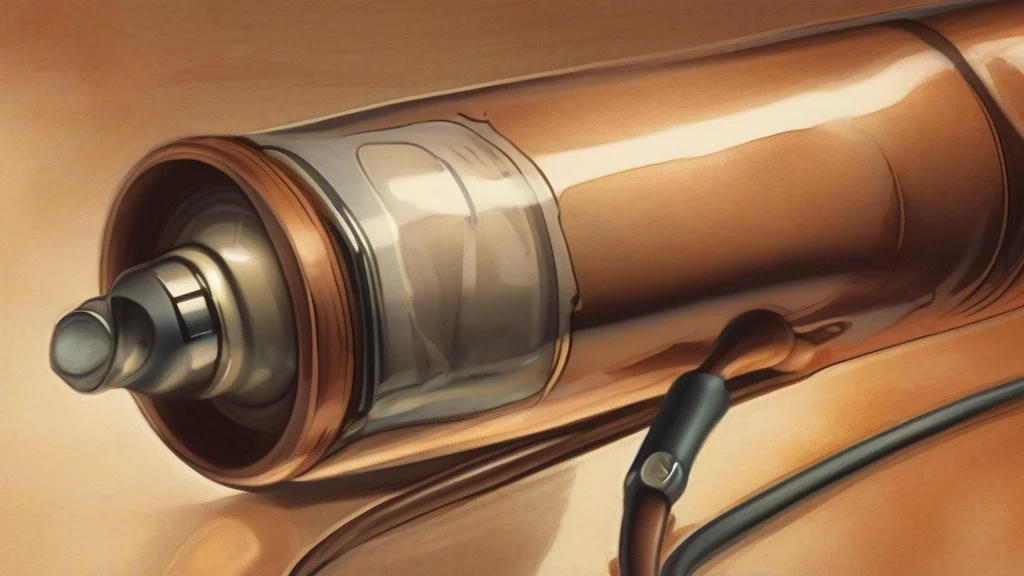
What does cystoscope mean?
A cystoscope is a specialized medical instrument used by urologists to look directly inside the urinary bladder. It is a thin, tube-shaped device equipped with a light source and lenses — or, in modern versions, a miniature video camera — that is passed through the urethra into the bladder, allowing the physician to inspect the bladder wall for tumors, stones, inflammation, or other abnormalities without invasive surgery. Cystoscopes come in rigid and flexible forms, each suited to different procedures. The word derives from the Greek roots "kystis" (bladder) and "skopein" (to look), so its meaning is essentially "a device for viewing the bladder." Related terms include cystoscopy, the name of the diagnostic procedure itself, and cystoscopic, the adjectival form. Because the word is firmly rooted in clinical practice, it appears almost exclusively in medical writing, hospital settings, and health literature rather than casual speech.
nounA slender, tube-shaped medical instrument fitted with a light and lens system that is inserted through the urethra into the bladder to allow direct visual examination of the bladder's interior.
- A lighted, tubular optical instrument inserted through the urethra into the bladder for direct visual examination of the bladder and urethra.
"The urologist used a cystoscope to inspect the lining of the patient's bladder for signs of abnormal tissue."
"The surgeon threaded a flexible cystoscope through the urethra to examine the bladder wall."
"Modern cystoscopes carry tiny cameras, letting doctors view the bladder interior on a screen in real time."
Regular English plural.
"The clinic stocks both rigid and flexible cystoscopes."
Its name literally means "bladder-viewer" — from the Greek words for bladder and to look — making it one of medicine's more transparently named tools.
Reviewed by Deb Chak, Editor. AI-assisted content curated by RJS Tech Solutions LLP.
Etymology of cystoscope
Cystoscope was coined in the nineteenth century from two Greek elements: "kystis," meaning bladder or pouch, and "skopein," meaning to look at or examine. It belongs to the same family of instrument names built on the "-scope" ending as telescope, microscope, and stethoscope. The term arose alongside the development of endoscopic instruments in the 1800s, when physicians first succeeded in illuminating and viewing the bladder's interior.
Related word forms
How cystoscope is actually used
Strictly a medical term, used in clinical and technical contexts rather than everyday conversation. It refers specifically to the instrument, not the procedure it enables (which is called cystoscopy).
Easily confused with cystoscope
The cystoscope is the physical instrument itself, while cystoscopy is the name of the examination procedure performed with it.