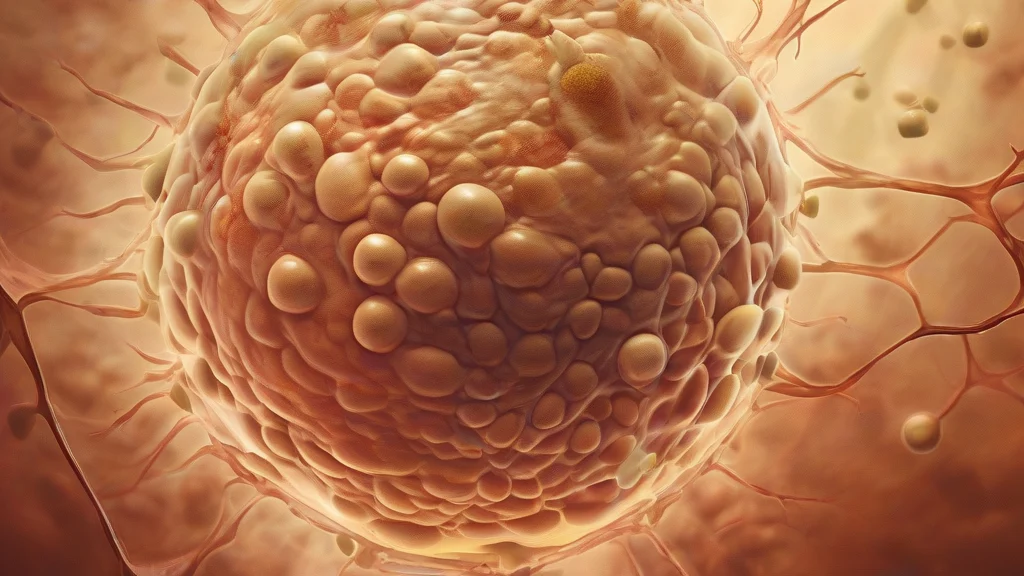
What does cytolysis mean?
Cytolysis is the biological term for the destruction or dissolution of a cell, usually occurring when its outer membrane ruptures and its contents spill out. It can result from many causes: an immune system attacking infected or abnormal cells, complement proteins punching holes in bacterial membranes, toxins disrupting membrane integrity, or red blood cells swelling and bursting when placed in dilute solutions — the last known as osmotic cytolysis. The word derives from Greek roots meaning roughly 'hollow vessel' and 'loosening,' reflecting how a cell is broken open. Cytolysis is central to immunology and microbiology, since both the body's defenses and certain pathogens rely on this mechanism. It differs from apoptosis, the tidy, programmed form of cell death, because cytolysis tends to release inflammatory contents into surrounding tissue. The adjective form is cytolytic, and related terms include cytolysin, a substance that brings about such destruction.
nounThe destruction or dissolution of cells, typically through the rupture of the cell membrane and loss of cell contents, caused by factors such as immune attack, toxins, osmotic imbalance, or infection.
- The rupture and dissolution of a cell due to damage to its membrane, whether from immune mechanisms (e.g., complement or cytotoxic T cells), toxins, osmotic stress, or other lytic agents.
- More broadly in biology and pathology, any process resulting in the breakdown and death of individual cells as distinct from tissue-level necrosis.
"Complement proteins bound to the bacterial surface triggered rapid cytolysis of the pathogen."
"Exposure to distilled water caused osmotic cytolysis of the red blood cells under the microscope."
"Cytotoxic T lymphocytes induce cytolysis of virus-infected cells by perforating their membranes."
Rarely pluralized; the singular is standard even when referring to multiple instances, which are usually described individually.
"Both samples showed distinct patterns of cytolyses under observation."
Your immune system kills infected cells by literally bursting their membranes — that process is called cytolysis.
Reviewed by Deb Chak, Editor. AI-assisted content curated by RJS Tech Solutions LLP.
Etymology of cytolysis
Cytolysis comes from the Greek elements 'kytos' (a hollow vessel, later adopted in science to mean a cell) and 'lysis' (loosening, dissolution, or breaking apart). The term was coined in the nineteenth century alongside the rise of modern cell theory and microscopy, when biologists needed precise vocabulary for cellular processes. It shares its '-lysis' suffix with words such as hydrolysis, electrolysis, and analysis, all denoting some form of breaking down or decomposition.
Related word forms
How cytolysis is actually used
A technical term used almost exclusively in scientific, medical, and laboratory contexts; it is rarely encountered in general conversation. It is neutral in connotation within those fields, describing a mechanism rather than a judgment. In casual speech, 'lysis' alone is sometimes used as shorthand.
Easily confused with cytolysis
Apoptosis is a controlled, orderly form of programmed cell death in which the cell fragments cleanly, whereas cytolysis is typically a rupture of the cell membrane that spills contents and often triggers inflammation.