What does cytoplasm mean?
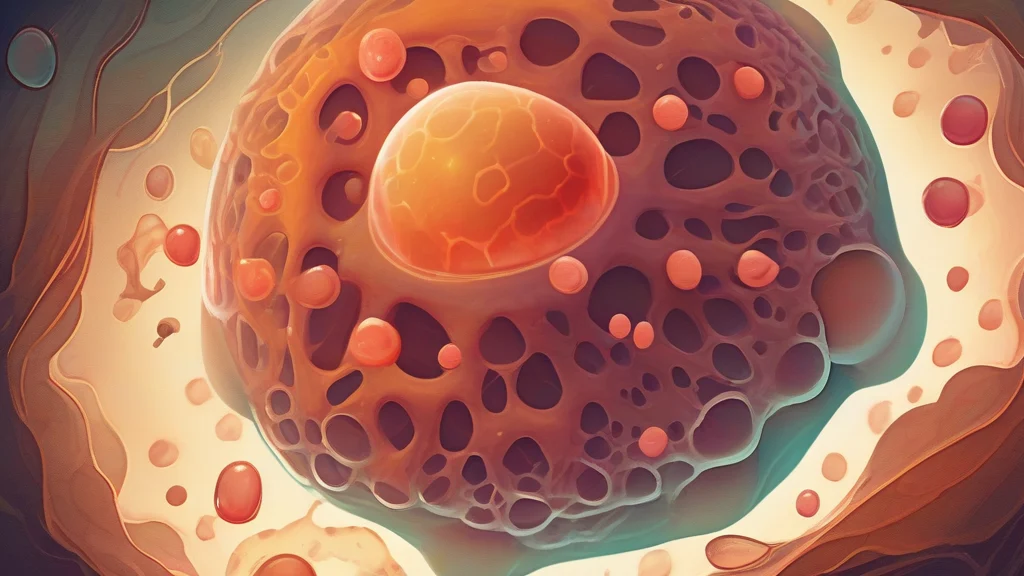
Cytoplasm is the thick, jelly-like material that fills a biological cell and surrounds its nucleus. Composed largely of water together with salts, sugars, proteins, and other dissolved molecules, it provides the medium in which the cell's organelles—such as mitochondria and ribosomes—are suspended and in which many essential chemical reactions take place. In cells without a defined nucleus, such as bacteria, nearly the entire interior counts as cytoplasm. The word belongs to the vocabulary of biology and medicine rather than everyday speech, appearing most often in textbooks, laboratory reports, and scientific journalism. A related but distinct term is cytosol, which refers only to the fluid portion of the cytoplasm, excluding the organelles. Understanding cytoplasm matters because virtually every process that keeps a cell alive—energy production, protein synthesis, waste processing—occurs within or depends upon it, making it one of the fundamental concepts of cell biology.
nounThe jelly-like substance, composed mostly of water, salts, and proteins, that fills the interior of a cell and surrounds the nucleus and other organelles; it is the medium in which most cellular metabolic activity occurs.
- The gel-like substance within a cell, exclusive of the nucleus, in which organelles are suspended and metabolic reactions take place.
"The organelles float suspended within the cell's cytoplasm."
"Under the microscope, granules could be seen drifting slowly through the cytoplasm."
"During cell division, the cytoplasm divides along with the genetic material to form two daughter cells."
Rarely pluralized; biologists typically speak of 'the cytoplasm' of individual cells rather than counting multiple cytoplasms.
"Each of the two daughter cells received roughly half of the parent cell's cytoplasm."
Every living cell you've ever been made of runs its daily chemistry inside a single drop of this ancient, self-renewing jelly.
Reviewed by Deb Chak, Editor. AI-assisted content curated by RJS Tech Solutions LLP.
Etymology of cytoplasm
The word cytoplasm was coined in the nineteenth century from two Greek roots: kytos, meaning a hollow vessel or container (the source of the cell-related prefix cyto-), and plasma, meaning something formed or molded. It emerged as microscopists in the 1800s worked to describe the translucent substance observed inside cells, distinguishing the material around the nucleus from the nuclear contents themselves. Its Greek-derived relatives include cytosol, cytoskeleton, and the more general term plasma.
Related word forms
How cytoplasm is actually used
A technical term used almost exclusively in biology and medicine; rare in everyday conversation. Strictly speaking, 'cytoplasm' includes both the fluid cytosol and the organelles suspended in it, so careful scientific writing distinguishes the two.
Easily confused with cytoplasm
Nucleoplasm is the similar gel-like substance inside the nucleus, whereas cytoplasm is the material filling the rest of the cell outside the nucleus.
Cytosol is specifically the aqueous fluid component of the cytoplasm, excluding the organelles suspended within it.